
How to Live a Happier Life
A Simple Self-Help Guide
The self-help industry is a rapidly growing, multi-billion global market, offering books, coaching, apps, and seminars focused on personal growth, career enhancement, health, and longevity. This demand is understandable, given the increasing challenges and velocity of modern life.

A diagnosis of the collective state of the people living in industrialized nations would be incomplete without mentioning:
the burnout crisis;
the mental health crisis;
the loneliness epidemic;
increasing trauma-related disorders;
increasing chronic diseases.
Our complex and interconnected lives have become ever harder to navigate. We are witnessing:
the normalization of lying, cruelty, and narcissism;
the weaponization of ideology;
online radicalization through fabricated outrage, rampant disinformation, and willful ignorance;
the loss of a consensus reality in an emerging post-truth world;
the erosion of the social fabric.
A global environment of fear, denial, cynicism, indifference, callousness, superficiality, disenchantment, and alienation is cultivated. As a result, it is not surprising that many people try to ease this existential pressure by distracting themselves with blind consumerism and numbing escapism.
Making matters worse, our dysfunctional human behaviors are destabilizing the entire biosphere, pushing planetary systems towards their tipping points [src1, src2], all while seven out of nine planetary boundaries have already been breached [src]. We have created linear systems of extraction and disposal that, on a finite planet, inevitably result in unsustainable exploitation and systemic pollution. We are committing ecocide at a dramatic and increasing scale.
At the same time, our financial systems are dysfunctional [src1, src2] and demand eternal growth. Inequality is increasing at an alarming pace, with ever fewer individuals possessing unfathomable amounts of wealth. The prevailing political-economic systems appear to generate inequality as a design feature. Meanwhile, global debt has long reached absurd levels, threatening future prosperity.

It seems fair to characterize the zeitgeist as follows:
Individually, we are suffering from a spiritual crisis. We’ve lost meaning. What are we doing here?
Collectively, we are suffering from a mass psychosis destroying ourselves and the planet.
The word hypernormalization [src] seems to describe the status quo best:
A state where a clearly dysfunctional society continues to function because no one can imagine an alternative, leading everyone to pretend the absurdity is normal.
In this polycrisis era, it is unsurprising that people would seek the advice of self-help gurus. The allure of empowering guidance can be especially irresistible in times of personal and collective vulnerability and crisis. Who wouldn’t be enticed by the following promises:
“Manifest the life you deserve.”
“Unlock your limitless potential.”
“The universe wants you to be prosperous.”
“Become the person you were always meant to be.”
“This optimization protocol will change everything.”
“Discover what’s holding you back from feeling the way you want to.”
But what if individual and global disenchantment have the same root cause? A remarkably simple but very unexpected explanation? What if you already have all the tools needed to fundamentally transform your experience of life, allowing you to create meaning and find purpose? What if the antidote requires no guru to follow and no product to purchase?
→→→ For the busy reader who may want to skip ahead, the happiness recommendations are summarized in the last section, The Path to Happiness.

Setting the Stage
Every one of us is embedded in a socio-cultural context that is solely determined by geography. Norms and conventions enforced in one place might be understood as fundamentally flawed when viewed through the lens of a different culture. This is the first realization. Many of the beliefs, convictions, and value systems we have internalized are products of geography-dependent conditioning. If you had been born in another place on Earth, you most likely would hold radically different beliefs about the world, the self, and what matters. The Western mind itself is a case in point, harboring peculiarities so pervasive they are rarely noticed from within [src].
The second insight is what the First Noble Truth of Buddhism teaches. Namely, that suffering is an inherent aspect of existence. Your life is temporary. You will die. Everyone you love, everything you possess, will be lost. However, in today’s hyper-modern and consumer-driven societies, the concept of death is rendered invisible [src]. Advertisements glorify an illusion of eternal youth. Nursing homes, hospices, and the funeral industry offer outsourced services that allow families to minimize confrontation with the dying. Death is managed and sanitized, less as a profound existential circumstance and more as a logistical problem to be handled by professionals. The denial of one's own mortality is perhaps the most dysfunctional expression of a disenchanted worldview.
The third point to observe is epistemological. Today's world is shaped by the Western mind [src]. By mastering rationality and decoding the external world with the language of mathematics [src1, src2, src3, src4], the Western mind set out to conquer the world and the solar system. The extraordinary success of this endeavor is witnessed in the astonishing levels of technological mastery. Unprecedented leaps in progress continue to eclipse what were once considered the pinnacles of human achievement.
While these accomplishments are a testament to human ingenuity, the Western mind is afflicted by dramatic blind spots:
Rationality, common sense, and logic are not the only modes of cognition. Yet the Western mind's exclusive focus on these faculties has neglected the skills of interiority—mindfulness, meditation, introspection, and contemplative practice—blocking other valid paths to knowledge.
The dominance of patriarchal values—hierarchy, control, and conquest—has suppressed relational, embodied, and cyclical ways of being. The punishing father-god archetype has displaced the nurturing goddesses [src1, src2, src3] that preceded it. Indeed, the mother goddess [src] was the original sacred image of humanity, present across cultures for over twenty thousand years before the severance.
However, the most fundamental problem is ontological. This is the fourth challenge. We all hold necessarily irrational beliefs about the nature of reality and consciousness due to the fundamentally unresolved questions shrouding these enigmas. To this day, consciousness remains an intractable enigma [src1, src2], while the foundations of reality are illogical and incoherent [src]. Furthermore, the list of unsolved problems in science is long [src1, src2], and philosophy has moved from the confident rationalism of logical positivism to the radical skepticism of postmodernism, without arriving at a common ground [src].
It is a remarkable but inevitable fact that there is no certainty to be had about the nature of existence. As we are all forever locked in consciousness, everything we perceive and experience is mediated through consciousness. This means we are never “in touch” with a reality outside of our mind. This existential restriction is captured by the inescapable concept of solipsism, the philosophical position that only one's own mind is sure to exist, and that knowledge of anything outside one's own consciousness is impossible. While solipsism cannot be disproved empirically or theoretically, it is mostly dismissed because it offers no practical utility.
Today, two main metaphysical perspectives dominate human thought:
Physicalism: Only physical reality exists, and it is governed solely by physical processes.
Theism: A divine being is the source and sustainer of existence.
Both frameworks are problematic:
Physicalism is an unprovable metaphysical assumption that has masqueraded as a scientific fact [src].
Of all the existing versions of theism, how should the “correct one” be discerned, and how should we address the tension between competing factions? Moreover, institutionalized religions gravitate towards static and dogmatic thinking.
Both choices lead to disenchanted worldviews:
Physicalism's cosmic nihilism: We inhabit a random, purposeless, and arguably cruel cosmos. There is no meaning in anything, and when you die, you simply cease to exist.
Theism's heteronomy: Meaning is surrendered to an external authority, leaving the individual both unaccountable and dependent on rigid doctrines.
Having charted this existential terrain and identified the foundational pathologies, the current polycrisis seems hardly surprising. A civilization lacking interior literacy—skills of attention, humility, self-regulation, and meaning-making—will inevitably project its own unresolved dysfunctional dynamics onto the world. A civilization relying on rivaling desiccated and ossified dogmas will never find peace and wisdom.

The First Steps
Individual transformation is a powerful response to a collective crisis. By becoming a happier person, you become an inspiration for those around you. In order to live a happier life, we first need to examine our relationship to suffering, death, meaning, and each other. This requires a multi-level reevaluation of our deepest belief commitments. Thus, a radical re-contextualization is called for:
Socio-cultural indoctrination: Assess the beliefs, values, and norms uncritically absorbed from the context you were born into.
Epistemological constraints: Acknowledge the limits of rationality as the sole mode of knowing.
Ontological assumptions: Examine the metaphysical foundations underlying your sense of reality.
But how do we begin?
Perhaps by listening to what other cultures have always known. Since the dawning of the human mind, virtually every tradition has developed and cultivated skills of introspection. As a result, the archetypal master of consciousness emerged, persisting throughout time in the guise of the shaman, the mystic, the meditator, and the psychonaut [src].
At the core of this mode of being lies a lived experience informed by non-ordinary states of consciousness. Our sober waking consciousness is just one competing state in a vast spectrum of awareness that can be radically altered by trance, meditation, breathwork, and psychedelics (surprisingly, sometimes even spontaneously or due to left hemisphere brain damage [src]). Challenging the Western mind's perceived cognitive supremacy, a profound insight is remembered: consciousness can access and experience what many traditions describe as non-physical realms of existence, thereby revealing forms of experiential knowledge that rationality alone cannot reach.
As we all have the faculties to explore such non-ordinary states of consciousness, the notion of empirical metaphysics becomes possible. This is the proposal that what we discover in altered states may reveal something real and reproducible about the nature of existence, including the essence of our own being. In more technical terms, modulations of consciousness can provide phenomenological constraints on viable metaphysical models.
Across traditions, two consistent insights have been echoed over time by the masters of consciousness [src]:
Existence extends beyond physical reality.
Underlying physical reality lies a field of consciousness, a structuring intelligence, or a divine love.
Remarkably, this knowledge has also always been implicitly woven into Western philosophy since Plato and had temporarily reemerged as metaphysical idealism in Britain and Germany from the late 18th to the early 20th centuries. Idealism is the claim that reality is fundamentally and exclusively mental. In other words, it understands consciousness as foundational, with everything physical being derived from this ground of pure awareness.
Although analytic philosophers successfully smothered idealism at the turn of the 20th century, labeling it a romanticization of subjectivity lacking logical rigor, we are now witnessing the renaissance of idealism in philosophy [src1, src2, src3] and in some parts of science [src1, src2]. Especially since the psychedelic renaissance [src], the nascent philosophy of psychedelics [src1, src2] has focused on the phenomenal content of the most radical and rich modes of consciousness accessible to the human mind.
I chronicled the current rise of idealism (and the demise of physicalism) in my last book, “The Sapient Cosmos: What a Modern-Day Synthesis of Science and Philosophy Teaches Us About the Emergence of Information, Consciousness, and Meaning” [src1, src2]. Therein, I propose syncretic idealism [src], a philosophical synthesis that combines recurring themes across different formulations of idealism with elements from other philosophical systems and insights from the evolving information-theoretic paradigm in physics [src].
The framework unveils a transcendental multiverse, just waiting to be explored by anyone brave enough to go beyond the comforting familiarity of consensus reality. It also identifies a will to complexity, a cosmic drive towards ever-greater order and meaning that governs the evolution of the universe itself. In other words, the universe's observed drive towards ever-greater levels of self-organized structure is reframed from a brute fact under physicalism into a teleology, a cosmic purpose.
On a personal note, a recent ayahuasca ceremony transformed my rational understanding of empirical metaphysics into a lived experience in a truly epistemically shocking way [src]. Entheogens are psychoactive substances used in a ceremonial and spiritual context, utilized since the beginning of human culture. Remarkably, the history of psychedelics reveals one of the Western mind’s gravest blind spots. By fetishizing the sober waking mode of consciousness, the Western mind has deemed all other modes of sentience impure, delusional, or perilous. A prime example of this prejudice can be found in the academic assessment of shamanism.

Shamanism is an ancient and universal human phenomenon, appearing around the world in the Upper Paleolithic or probably earlier. It is the oldest human spiritual tradition, characterized by numinous experiences of reality (animism) and dedicated to navigating non-ordinary states of consciousness. As such, the shamans are avid travelers between the physical and the non-physical worlds of existence. Within their responsibilities lie healing, divination, and spirit communication [src].
However, early anthropologists looked at shamans and diagnosed them as “epileptic, psychotic, hysterical, and schizophrenic” [src]. The historian Mircea Eliade was the first academic to identify the universality of shamanic practices worldwide. He summarized this in his seminal work “Shamanism: Archaic Techniques of Ecstasy” [src], wherein he claimed:
Narcotics are only a vulgar substitute for “pure” trance. […] Narcotic intoxication is called on to provide an imitation of a state that the shaman is no longer capable of attaining otherwise.
This is a remarkable bias and reflects the psychedelic illiteracy of his era, as entheogens, often called plant teachers, are a sophisticated consciousness technology at the center of indigenous traditions worldwide. They are a powerful vehicle for transrational knowledge generation, as evidenced by the extraordinary pharmacological understanding of indigenous traditions, developed without formal science yet identifying a myriad of compounds that Western medicine relies on [src]. The ethnobotanist Christian Rätsch, who visited many indigenous peoples to learn their shamanic botanical knowledge, documented the unfathomable abundance of psychedelic flora and their multifaceted use in “The Encyclopedia of Psychoactive Plants: Ethnopharmacology and Its Applications” [src]. This comprehensive guide counts a stunning 952 pages.
Why does such a plethora of chemicals exist in nature, which can profoundly alter and greatly enhance the normal functioning of the sober waking state of the human mind? Why don’t psychoactive plant molecules simply induce unconsciousness, delirium, or death? The physicalist will shrug and proclaim this to be another brute fact, an interesting coincidence. The shamans tell us a very different story, centered on the intelligence permeating the unseen world and expressed in nature [src].
In an idealist framing, the brain is understood as a transceiver rather than a generator of consciousness [src]. Aldous Huxley, inspired by the philosopher Henri Bergson, proposed the concept of Mind at Large, an oceanic boundlessness of consciousness that must be funneled through the reducing valve of the brain into a “measly trickle” of sober waking consciousness, thereby allowing us to survive on this planet [src]. Psychedelics have the capacity to alter the valve’s functioning, increasing the throughput of consciousness in the psychonaut and opening the doors of perception to transcendence. The words of the poet William Blake come to mind: “If the doors of perception were cleansed, every thing would appear to man as it is, infinite” [src].
One remarkable example of the molecular compatibility between plant compounds and human physiology is the endocannabinoid system, discovered in the late 1980s. This is one of the most extensive signaling networks in the brain and body. Its cannabinoid receptors (CB1 receptors in the brain) outnumber most other receptor types and function as regulators, modulating the activity of other neurotransmitter systems through feedback loops. This complex system helps maintain equilibrium across a wide range of functions, from hunger and temperature to alertness [src]. Cannabis is both a widely used illicit drug worldwide and the one with the longest recorded history of human use, dating back approximately 5,000 years to ancient China (where it was used to relieve pain and cramps) [src]. Today, its documented therapeutic applications include pain relief, anti-inflammatory, anticonvulsant, and antiemetic effects, though its association with recreational use has historically constrained its acceptance as a medical treatment [src].
The Axial Age was a pivotal period around 800–200 BCE [src], shaping India (the Vedic-to-Upanishadic transition, shifting emphasis from ritualistic practices to philosophy, Buddhism, and Jainism), China (the rise of Confucianism and Taoism), Greece (the development of Western philosophy), Persia (Zoroastrianism), and Israel (the rise of monotheism). Remarkably, the use of entheogens has been compellingly argued to have helped catalyze some of these spiritual breakthroughs. Notably, it is well attested in India through the Vedic soma tradition [src1, src2] and, as a serious scholarly hypothesis, in the case of the Greek Eleusinian Mysteries, centered on kykeon [src1, src2]. Indeed, it is hardly ever mentioned that the philosophy of Plato, who is regarded as the “father” of idealism, “was partly inspired by psychedelic intake” [src]. It is easy to imagine the Platonic realm of pure Forms and the Allegory of the Cave being directly inspired by first-hand psychedelic experiences of transcendence. The philosopher and mathematician Alfred North Whitehead said that the “safest general characterization of the European philosophical tradition is that it consists of a series of footnotes to Plato” [src].
While shamanism spans the globe, it is conspicuously absent in Europe. Some scholars have offered explanations. “In medieval and Renaissance Europe, widows and elderly women often became [...] healing shamans. Of course, the Inquisition termed them ‘witches’” [src]. The thesis of the book “The Immortality Key: The Secret History of the Religion with No Name” argues that psychedelics were foundational to Western civilization’s original religion, a prehistoric ritual tradition that survived for millennia before being adopted by early Greek-speaking Christians. It was eventually suppressed by the Church, its memory erased by centuries of witch hunts. This nameless tradition, the author contends, is the longest-running religion the world has ever known [src].

The emergence of the first chemically altered states of consciousness in the modern Western world began in the 18th century, before being stigmatized and demonized by the end of the 19th century [src]. It was an era in which doctors and scientists often performed self-experiments with drugs, notably nitrous oxide and ether. The pioneering psychologist and philosopher William James was profoundly influenced by his psychedelic experiences induced by inhaling nitrous oxide [src]. He devoted significant attention to the investigation of mystical experiences, culminating in his landmark 1902 work “The Varieties of Religious Experience” [src]. The mostly hidden history of the drug use of Western intellectuals includes Arthur Schopenhauer (generally promoted the use of intoxicants [src]), Friedrich Nietzsche (various drugs [src]), Sigmund Freud (cocaine [src]), Aldous Huxley (mescaline [src]), Robert Gordon Wasson (bringing psilocybin to the West [src] to the detriment of the curandera Maria Sabina who initiated him [src]), Jean-Paul Sartre (mescaline, leading to a mental breakdown [src]), and Albert Hofmann (serendipitous LSD [src]).
Psychedelics and their many promising therapeutic applications, including the treatment of alcoholism [src], were banned by Richard Nixon’s “War on Drugs” in 1970 [src]. It was later greatly expanded and militarized by Ronald Reagan [src]. Regrettably, one of the most encouraging frontiers in psychiatric medicine was shut down by what was later disclosed as a deceitful political agenda [src]. It is a bitter irony that psychedelics, still today, are classified as Schedule I drugs, like heroin. Specifically, these are “drugs with no currently accepted medical use and a high potential for abuse” [src]. Nonetheless, the nascent psychedelic renaissance has brought psychedelics back into serious scientific discourse and, importantly, reemphasized their therapeutic efficacy in treating many disorders, including treatment-resistant depression, PTSD, anxiety disorders, and addiction [src1, src2, src3, src4, src5, src6].
Psychedelics have also been shown to help alleviate end-of-life existential distress in patients with a life-threatening cancer diagnosis [src1, src2]. This is perhaps not too surprising, considering that psychedelics can induce mystical experiences. A landmark 2006 study heralding the psychedelic renaissance was titled “Psilocybin can occasion mystical-type experiences having substantial and sustained personal meaning and spiritual significance” [src]. Therein, a majority of volunteers rated the psychedelic experience as either the single most meaningful experience of their life or among the top five most meaningful ones, comparable to the birth of a first child. Moreover, psychedelics can induce enduring positive change through spiritual transformations, involving changes in metaphysical beliefs. Specifically, “idealism mediated a link between the use of psychedelics and subjective wellbeing” [src].
Only as late as 1998 did a seminal publication begin to elucidate the neural mechanisms underlying the effects of psychedelics [src]. In detail, it was shown how psilocybin affects the human brain by stimulating the 5-HT2A serotonin receptors. In other words, psychedelics are 5-HT2A receptor agonists. Three remarkable and unexpected potential findings have recently emerged from psychedelic neuroscience. Psychedelics are suspected to promote neuroplasticity (the brain’s ability to reorganize its structure and function), specifically through dendritogenesis (growth of dendritic branches), synaptogenesis (formation of new synaptic connections), and neurogenesis (generation of new neurons) [src1, src2, src3]. Psychedelics are also being studied for their potential longevity benefits [src1, src2].
However, the most unexpected finding relates to psychedelic neuroimaging studies, the first performed in 2012 [src]. The results appear to challenge a core physicalist assumption: that richer conscious experience requires greater neural activity. Christof Koch, a pioneering neuroscientist who helped introduce the concept of neural correlates of consciousness in 1990 [src], establishing neuroscience as a serious academic field, commented on the study [src]:
To the great surprise of many, psilocybin, a potent psychedelic, reduces brain activity. […] The study once again highlights how elusive our knowledge of the mind-brain hinge remains.
In detail, psychedelics do not simply increase overall brain activity as expected. Instead, many studies report reductions in activity, synchronization, and oscillatory power in key hub regions [src1, src2, src3], particularly within the brain’s Default Mode Network, a network associated with self-referential thinking, autobiographical memory, mind-wandering, and the sense of a stable, bounded self. Simultaneously, communication between regions that do not normally interact becomes more fluid and globally interconnected, while overall brain dynamics grow more flexible [src]. Moreover, widespread decreases in rhythmic brain oscillations were observed, especially alpha oscillations, which are thought to help maintain the brain’s normal filtering and stabilizing processes for ordinary waking cognition [src1, src2].
This raises a profound question: why would loosening or disorganizing major neural control systems correspond to a dramatic expansion and enrichment of conscious experience rather than a diminishment? The physicalist response involves introducing a second mechanism for conscious experience. During ordinary waking consciousness, neural activity correlates with subjective experience. For psychedelic states, however, it is not activity but disorder, namely entropy, that is now introduced to explain the richness of the phenomenal content of the experience [src1, src2]. However, not everyone is convinced [src].
It is worth noting that, currently, the nature of consciousness remains enigmatic [src], with 350 proposed scientific theories [src]. However, psychedelics are emerging as a powerful empirical tool in consciousness research. Interestingly, one of the most potent psychedelics is endogenous to humans, namely DMT [src]. While its physiological role remains largely unknown [src], the phenomenology of a DMT trip has striking similarities to near-death experiences [src]. Ayahuasca’s primary psychoactive component is also DMT, rendered orally active through the MAOIs present in the brew [src]. As a philosopher of psychedelics observed [src]:
To deny philosophers of mind psychedelic substances is tantamount to denying instruments to musicians. If one is to study consciousness, one must involve its most wondrous manifestation.
It is easy to forget that not too long ago, psychedelic states were dismissed as deluded hallucinations.
In closing, an honest assessment is that the nature of consciousness is a metaphysical affair. While most researchers still operate from within the safe confines of physicalism, some dare to question the orthodoxy. In the year 2023, Christof Koch conceded a bet he made 25 years earlier, wagering that by that year, the neural mechanisms of consciousness would be fully understood [src]. During this period, he converted from physicalism to panpsychism [src1, src2], the view that degrees of consciousness are inherent in fundamental matter.
Koch lost the bet to the philosopher of mind, David Chalmers, famous for introducing the hard problem of consciousness at a conference in 1994 [src]. This is the question of how non-conscious matter can coalesce and produce phenomenal experience. Or more specifically, why and how do brain processes give rise to subjective experiences? The hard problem challenges the metaphysical assumptions of physicalism, and “inspired a tidal wave of new scholarship” [src], shaping the dominant questions in the philosophy of mind and polarizing the discourse [src]. In 2020, Chalmers summarizes his intellectual evolution as follows [src]:
First, one is impressed by the successes of science, endorsing materialism about everything and so about the mind. Second, one is moved by the problem of consciousness to see a gap between physics and consciousness, thereby endorsing dualism, where both matter and consciousness are fundamental. Third, one is moved by the inscrutability of matter to realize that science reveals at most the structure of matter and not its underlying nature, and to speculate that this nature may involve consciousness, thereby endorsing panpsychism. Fourth, one comes to think that there is little reason to believe in anything beyond consciousness and that the physical world is wholly constituted by consciousness, thereby endorsing idealism.
In my own work, I have taken the first two steps and have flirted heavily with the third. In this paper I want to examine the prospects for the fourth step: the move to idealism.
Chalmers concludes by pointing out that “no position on the mind–body problem is plausible,” and that “idealism is not greatly less plausible than its main competitors.”

The Art of Being Happy
The most liberating aspect of idealism is the potential merger of two historically separated existential pursuits, unveiling the promise of scientific spirituality [src]. In other words, uniting the rigorous study of the outer world with deep inner exploration. This synthesis offers a practical and comprehensive guide to personal transformation and well-being. The goal is to become a happier person based on a deep and holistic transformation of one's self.
Scientific spirituality is not only a metaphysical position but should crucially be a lived practice. What follows maps its expression across the core dimensions of human well-being. The four pillars of happiness are categorized as follows:
Physical foundation
Nutrition and hydration
Exercise
Sleep
Breathing techniques
Avoidance of toxins
Mental practice
Looking inward
Mental hygiene
Combating fear and anxiety
Seeking truth
Relational embedding
Social connection
Ecological connection
Play and leisure
Altruistic joy
Metaphysical context
Suffering
Death
Meaning
Purpose
The essence can be captured by expanding a classic Latin phrase:
Mens sana in corpore sano, in nexu vivo, in mysterio accepto.
“A sound mind in a sound body, in living connection, in accepted mystery."
1. The Physical Pillar
Happiness is a state of mind that requires nurturing and cultivation. A foundational prerequisite is a healthy body. There are surprisingly many, and often very simple, behaviors that have been shown to be beneficial to human health. It is remarkable that most people choose not to engage with these insights and actually seem to actively resist them.
1.a. Nutrition and Hydration
Although one might naively think this item is the easiest to cover, it is, in fact, the most contentious. Some of the reasons are related to industry interests [src1, src2, src3] and education:
Researchers have found a way of eating that may prevent, treat, and even reverse the progression of many of our deadliest diseases, including our number one killer, heart disease, as well as type 2 diabetes and high blood pressure. Despite this, doctors get little, if any, formal nutrition training in medical school and often graduate without some of the most powerful tools available to stop the chronic diseases that remain our leading causes of death and disability.
However, the central difficulty in discussing nutrition is ideological. Your diet constitutes a personal identity, meaning that insights from evidence-based research play a secondary role to personal convictions. Our seemingly rational human minds often fall prey to a surprising array of cognitive biases and dissonances.
Consider the following statement:
A growing body of evidence suggests that a whole food, plant-based (WFPB) diet is likely the healthiest way to eat for most people. This means avoiding processed foods while focusing on fruits, vegetables, beans, legumes, whole grains, nuts, seeds, herbs, spices, and mushrooms.
If that claim stirs any unease or skepticism, then scientific spirituality is the gentle invitation to take a step back, explore the empirical evidence with an open mind, and inquire about the roots of that feeling, be they cultural, ideological, habitual, or identity-driven.
It is also worth considering that most things in life are never simply black or white, and that nuance is often important. Personal needs, preferences, and circumstances always matter. A WFPB approach may be best viewed not as a rigid dogma to enforce, but as a compelling attractor to gravitate towards at one’s own pace. It can be beneficial and rewarding in many dimensions, as the evidence presented below suggests.
Before diving into the scientific literature, it should be noted that one of the most pleasant surprises for many people is how quickly taste buds adapt. What once seemed “missing” often gives way to a heightened appreciation for the vibrant, complex flavors of real food. Plant-based meals can be sophisticated and exquisitely delicious [src]. Indeed, many may discover they enjoy their food more, not less, once the dietary focus shifts.
A WFPB diet has been shown to contribute to the reversal of chronic diseases [src1, src2, src3], while large-scale longitudinal epidemiologic studies confirm its association with significantly reduced incidence of chronic disease and all-cause mortality [src1, src2, src3, src4, src5, src6, src7, src8, src9, src10, src11]. Higher plant protein intake correlates with lower all-cause mortality and longevity [src1, src2, src3, src4, src5, src6, src7]. The often voiced claim that plant protein is inferior is contradicted by empirical evidence [src1, src2].
Another popular plant-protein myth is dispelled by the existence of vegan athletes [src], especially strongmen and strongwomen [src1, src2]. In this context, it is also worth noting that protein supplementation only enhances resistance training-induced gains in muscle mass and strength up to about 1.6 g/kg/day (double the recommended dietary allowance), with effects leveling off thereafter [src1, src2]. Such a protein intake should be easily achievable on a WFPB diet [src]. While consuming protein during the peri-workout period increases muscle protein synthesis, “it should be noted that total daily caloric and protein intake over the long term play the most crucial dietary roles in facilitating adaptations to exercise” [src].
Indeed, the vast majority of people in industrialized nations already consume protein in excess. Even vegans get up to 70% more protein than the recommended daily dietary intake [src]. Overall, adverse effects due to the lack of “essential nutrients, including protein, have not been reported to occur on any natural human diet, as long as calorie intake is sufficient” [src]. Meaning that if you are maintaining your body weight, the chances of hypoproteinemia are vanishingly small if on a well-planned WFPB diet. An obvious expectation, given the fact that plant-based protein is easily attainable [src1, src2].
Regarding longevity, a vegan diet can positively impact cellular aging [src]. One major targeted aging mechanism is decelerated telomere attrition [src]. While modern medicine can be very effective in extending the lifespan of patients, what is ideally extended is the healthspan, the years truly spent in good health. Blue Zones [src] harbor the world's highest concentrations of centenarians, with nonagenarians commonly found in good health, maintaining purposeful work, strong social bonds, and active community participation. The dietary pattern is predominantly plant-based [src1, src2].
Worryingly, the American Heart Association’s 2020 Strategic Impact Goals assess cardiovascular health using four health behaviors: smoking, physical activity, body mass, and diet. While three indicators improved over the years, diet scores remained very poor (assessed by intake of fruits/vegetables, whole grains, fish, sodium, and sweets/sugar-sweetened beverages) [src]. In 2019, an almost vanishingly small fraction of the cohort achieved an “ideal” cardiovascular health metric value related to diet [src].
A controversial topic concerns the health effects of vegan diets among children and adolescents. Globally, early-life survivorship improves with higher animal-based protein consumption, while later-life survival improves with increased plant-based protein intake [src]. It has also been argued that a vegan diet is potentially harmful to children’s physical and social well-being [src]. However, others have pointed out that such claims often do not rely on well-designed WFPB diets and that generally little data on the nutrient status of vegan children are available [src1, src2, src3]. In summary, “the current literature suggests that a well-planned vegan diet using supplementation is likely to provide the recommended amounts of critical nutrients to provide for normal progression of height and weight in children, and can be beneficial in some aspects” [src]. It is also worth noting that a cultural bias could be at play. Some traditions, such as Jainism, have a long history of vegetarian and near-vegan practices [src1, src2], yet these remain almost entirely absent from the clinical nutrition literature, especially relating to children.
WFPB diets have been criticized for being expensive and for being associated with privilege. The facts, however, tell a different story [src]. Moreover, eating meat comes with a rarely acknowledged convenience: the slaughtering is outsourced and sanitized. Slaughterhouse workers have a higher prevalence rate of mental health issues, in particular depression and anxiety [src].
Perhaps a more pertinent concern is the substantial government subsidies for the meat and dairy industries [src]. This matters all the more given that “plant-based diets could save millions of lives and trillions of dollars a year” [src]. Indeed, an “improvement of diet could potentially prevent one in every five deaths globally,” with non-optimal intake of whole grains, fruits, and sodium accounting for more than 50% of deaths [src]. Moreover, “a gradual transition from animal- to plant-based protein may be desirable in order to maintain environmental stability, ethical reasons, affordability of food, greater food safety, fulfilling higher consumer demand, and combating of protein-energy malnutrition” [src].
Finally, a concerning observation relates to the multi-billion-dollar wellness industry, now disseminated by influencers on social media. Dietary recommendations are naturally a major focus of these channels, where anecdotes routinely outweigh evidence and commercial interests frequently masquerade as health advice. The result is a landscape of contradictory, unverified, and often actively harmful health claims that reach millions of people with no regulatory oversight or accountability. Stated bluntly, wellness scammers are tirelessly trying to exploit the confusion and anxiety surrounding health topics by peddling disinformation for profit [eg1, eg2].

Some of the beneficial mechanisms of a WFPB diet are well-understood:
The microbiome is a universe of microorganisms, including bacteria, archaea, protists, fungi, and viruses, outnumbering the 30 trillion human cells. Especially the gut microbiota is a central pillar of health:
The composition of a person’s gut microbiota is a strong predictor of
good health and longevity [src]. A diverse microbial ecosystem is essential. The term dysbiosis refers to a decrease in microbiota diversity, including the loss of beneficial microorganisms. While Western diets can promote dysbiosis, driving chronic disease [src1, src2], indigenous populations often maintain remarkably diverse microbiomes [src1, src2]. Overall, a WFPB diet is effective at fostering a diverse microbial ecosystem [src1, src2].
The gut-brain axis modulates mental health [src1, src2]. The term psychobiotics refers to certain live bacteria that specifically confer mental health benefits when ingested in appropriate amounts [src].
The gut-muscle axis is a bidirectional signaling network “now understood to be a critical regulator of muscle homeostasis” [src]. An “optimal intestinal microbiota composition may have an impact on muscle protein synthesis and mitochondrial biogenesis and function, as well as muscle glycogen storage” [src].
Research is investigating whether “bad” microbes can increase the risk of noncommunicable health problems and whether they can actually be transmitted between people [src].
The best diet for a healthy microbiome includes fermented foods (probiotics) that introduce beneficial microorganisms and fiber that feeds them (prebiotics). Alarmingly, a Western diet is typically very low in fiber [src1, src2]. In particular, about 94% of US Americans are fiber-deficient [src]. The “fiber gap” is a startling revelation, especially as a large and successful marketing effort focuses on protein, which, as mentioned, the vast majority of people in industrialized nations already consume in excess. Fiber consumption is associated with longer telomeres and slower biological aging [src].
Oxidative stress and inflammation are the hallmarks of chronic-degenerative diseases, which a WFPB diet can prevent [src]. Natural antioxidants are found in almost all plants [src], and plant-based foods have anti-inflammatory effects [src].
Epigenetics is the study of changes in organisms caused by modifications
of gene expression rather than alterations of the underlying DNA sequence. Epigenetic changes can be diet-related [src], with a WFPB diet associated with slower epigenetic aging [src1, src2].
A WFPB diet is optimal for weight management [src1, src2, src3], while overweight and obesity are associated with a number of chronic diseases. Furthermore, a lower body mass index is associated with a lower prevalence of hypertension [src], a “worldwide problem of enormous consequence” [src].
A WFPB diet reduces dietary acid load. “Contemporary diets in Western countries are largely acid-inducing and deficient in potassium alkali salts, resulting in low-grade metabolic acidosis. […] An elevated dietary acid load has been associated with systemic inflammation and other adverse metabolic conditions” [src].
The ongoing bioaccumulation and biomagnification of toxins pose a growing threat to human health. Thus, eating at the base of the food chain minimizes exposure to persistent organic pollutants, heavy metals, and other toxins that accumulate at each successive trophic level, reaching their highest concentrations in animal tissues and secretions [src1, src2, src3]. Tragically, even remote populations are affected by this, like the Inuit women from Arctic regions whose toxic breast milk (due to a diet rich in marine mammals) poses a potential health risk to their infants [src]. Overall, exposure to persistent organic pollutants incurs the risk of metabolic diseases [src].
Superfoods are nutrient-dense whole foods [src], including berries, leafy greens, cruciferous vegetables, nuts, and legumes. In particular, plants contain a wide variety of complex phytonutrients offering many health benefits. Some examples are:
Cruciferous vegetables, including broccoli, cauliflower, kale, rocket salad, cabbage, “contain a myriad of biologically active molecules and nutritional components” [src]. Moreover, kale is easy and cheap to cultivate and is tolerant of adverse climatic conditions [src]. Specifically:
Sulforaphane is a potent antioxidant and anti-inflammatory phytochemical found in cruciferous vegetables [src]. It is a promising compound for fighting cancer [src1, src2].
Isothiocyanates, which have been identified as major bioactive constituents of cruciferous vegetables, are also known to be cancer-preventive agents [src].
The colorful pigments in fruits and vegetables (e.g., carotenoids, flavonoids, betalains, and chlorophylls) are potent phytonutrients with documented health benefits. “Eat the rainbow” is a nutritional dictum advising people to consume a wide variety of colorful fruits and vegetables to improve health outcomes [src].
Catechins in green tea are well-known for their anticancer and anti-inflammatory effects [src1, src2, src3].
The health benefits of curcumin in turmeric, due to its antioxidant and anti-inflammatory effects, are well documented [src].
Onion, ginger, and garlic have numerous health benefits and provide protection against various diseases [src].
Artichokes are one of the richest dietary sources of polyphenols, powerful antioxidants and anti-inflammatory compounds, with high bioavailability. They contain high-quality inulin (a prebiotic), fibers, and minerals [src].
Ergothioneine is a potent antioxidant. Of 112 compounds measured in the bloodstream of over 3,000 individuals, ergothioneine was the most strongly associated with the lowest all-cause mortality rate [src]. The amino acid cannot be synthesized by plants or animals, only certain mushrooms and bacteria. Edible mushrooms are recognized as the richest natural source of ergothioneine. Overall, it is advisable to cook mushrooms before eating, especially button mushrooms and morels [src1, src2].
Blueberries have “multilateral health advantages and their potential to improve bodily and mental health urges the incorporation of this nutrient-dense fruit into daily diets” [src].
The antioxidant and cholesterol-lowering properties of Brazil and pecan nuts have been documented [src1, src2, src3, src4].
Black rice is another nutrient-rich, antioxidant, and anti-inflammatory food. Many health benefits of including it in one's diet have been reported [src].
Sweet potatoes are high in nutritional value, providing vitamins, minerals, fiber, and antioxidants, and can help reduce the risk of chronic diseases, improve digestive health, regulate blood sugar levels, and enhance vision [src].
Raw cacao is exceptionally nutrient-dense [src] and is among the rare foods to contain anandamide and theobromine, compounds associated with mood regulation and well-being [src1, src2]. Cacao finds its use in ceremonial contexts in many shamanic cultures. Its botanical name, Theobroma cacao, translates to "food of the gods."
While algae are mentioned below in the context of long-chain fatty acids, microalgae such as spirulina and chlorella are nutrient-rich and potent antioxidants [src1, src2]. Unfortunately, they can also be affected by the accumulation of environmental contaminants [src].
Indian gooseberry (also known as Amla, Amalaki, or Aonla among other names) is a powerful antioxidant and one of the oldest and most important plants in traditional Indian medical systems, particularly Ayurveda. It has “antidiabetic, hypolipidemic, antibacterial, antiulcerogenic, hepatoprotective, gastroprotective, and chemo-preventive properties” [src].
Black cumin has been used in different civilizations around the world for centuries to treat ailments. Its beneficial health effects have been corroborated [src].
Green salads are highly nutritious [src] and are associated with improved oral cancer survival [src].
A few techniques can amplify the benefits of plant foods:
The health effects of sulforaphane, abundant in broccoli, can be amplified by either adding ground mustard seeds or using the "chop and rest” technique, letting small cut pieces rest for 40 to 90 minutes before cooking.
Adding piperine, the active ingredient in pepper, to turmeric increases its efficacy.
Starch retrogradation is a process by which cooked starch changes from a disordered state to an ordered, crystalline structure as it cools, forming resistant starch, a powerful prebiotic. This type of carbohydrate not only blunts the glycemic spike but is also fermented by colonic bacteria into short-chain fatty acids, which play an important role in maintaining health and preventing disease [src]. Simply storing cooked potatoes and rice in the fridge overnight suffices.
A related topic is supplementation:
Vitamin B12, produced only by microorganisms, is not exclusively a concern for people adhering to a plant-based diet, making supplementation advisable across all dietary patterns, particularly with age [src].
Observational data have suggested that vitamin D deficiency is prevalent [src]. Note, however, that high doses can be toxic [src].
Omega-3 fatty acids, especially EPA and DHA, are essential for brain function, cardiovascular health, and inflammation regulation [src]. Since their presence in fish oil originates from algae, these compounds can be sourced directly from algae-based supplements, which avoids the bioaccumulation of contaminants found in fish oil [src]. The optimal level of omega-3 supplementation depends on the omega-6 intake, as their ratio is the critical factor. Omega-6, a pro-inflammatory agent, is pervasive in Western diets, particularly found in processed foods. Ideally, the 6-to-3 ratio should be around 1:1; however, in Western diets it can reach 20:1 [src].
It should be noted that an increasing number of modern foods are fortified with vitamins and minerals.
An ongoing discussion relates to seed oils. For instance, the health benefits of olive oil, part of the Mediterranean diet, seem to be common knowledge [src1, src2]. Overall, seed oils appear to be the healthier choice compared to margarine, butter, mayonnaise, dairy fat, lard, and beef tallow [src1, src2]. However, seed oils have also been implicated in impairing endothelial function, which is essential for vascular health [src1, src2]. Coconut oil has a high saturated fatty acid content, making it potentially the least favorable choice [src]. Moreover, the smoke point of these oils is also a factor to consider when cooking with these ingredients [src]. Seed oils can be part of both healthy and unhealthy diets. “Instead of cutting out all foods containing seed oils, consider eating less ultraprocessed food and more whole foods, fruit, and vegetables—and then use seed oils together with those” [src].
Some plant compounds are considered antinutrients, which can interfere with the body's ability to absorb essential nutrients. An example is lectins found in legumes. However, cooking them for just 5–10 minutes can significantly deactivate them. Overall, “the health benefits of consuming these foods far outweigh the potential harm of lectins in these foods” [src]. Some nuts have a high concentration of phytic acid (e.g., almonds, Brazil nuts, and walnuts), which can reduce the absorption of iron, zinc, and calcium. Soaking the nuts can break down some of the phytic acid, and it “is a good example of a nutrient that can be both beneficial and harmful, depending on the circumstances” [src]. Protease inhibitors are natural compounds found in various plants that are also destroyed by cooking. They can inhibit protein digestion in humans, but also have anti-inflammatory and cancer-preventive effects [src].
Another potential antinutrient concern relates to oxalates and kidney stones. High-oxalate diets, low fluid intake, low calcium intake, and high sodium consumption significantly raise the risk [src1, src2]. However, it should be noted that a diet rich in vegetables and low in animal protein is associated with the lowest risk of incident kidney stones [src1, src2]. Moreover, plant-based diets can prevent kidney disease [src1, src2], which is especially relevant as chronic kidney disease ranks among the top ten causes of death worldwide [src]. While substantial amounts of oxalates are also produced by the body as a natural byproduct of metabolism, they can easily be avoided in plant foods, as only a few plant families have exceptionally high oxalate concentrations, for instance, spinach, sorrel, rhubarb, mangold, and amaranth [src].
In summary, the spectrum of complex phytochemicals in plant foods is astounding, with many having demonstrated robust health benefits. Unsurprisingly, the effects of some plant compounds are more ambiguous, having both beneficial and unfavorable properties. However, the potential harm can be easily mitigated with proper preparation or selective avoidance. The scientific evidence suggests that antinutrients are not a concern in a well-planned WFPB diet [src], and no Blue Zone is known to restrict plant foods. Thus, if a wellness influencer claims that plants are toxic and should be excluded from your diet, this is either egregious misinformation or malicious disinformation [eg], aimed at gaming the attention economy or selling you something you don’t need [eg1, eg2, eg3].
While many benefits of plant foods have been highlighted, the harms associated with eating various animal-source foods are also well-known, promoting cardiovascular disease and various types of cancer [src1, src2, src3, src4]. These are the two leading causes of death worldwide [src1, src2]. Specifically, an increased risk of all-cause mortality has been associated with the intake of processed and organ meat [src].TMAO (trimethylamine N-oxide) is a gut-microbiome-derived metabolite produced when bacteria metabolize nutrients like choline and carnitine found in red meat, eggs, and dairy, and is implicated in increasing cardiovascular and cancer disease risks [src1, src2, src3, src4]. In particular, “TMAO can cause epigenetic changes to DNA and, through the formation of N-nitrous, compounds damage DNA, which can lead to malignant transformations in exposed cells” [src]. Relating to cancer, in 2018, the World Cancer Research Fund and the American Institute for Cancer Research issued revised recommendations for cancer prevention, adherence to which substantially reduces the risk of total cancer [src]. The dietary recommendations include [src]:
Consume a diet that provides at least 30 grams per day of fiber from food sources.
Include in most meals foods containing wholegrains, non-starchy vegetables, fruits, and pulses (legumes) such as beans and lentils.
Eat a diet high in all types of plant foods, including at least five portions or servings (at least 400 grams in total) of a variety of non-starchy vegetables and fruits every day.
Sadly, the authors note that “many people do not meet the recommendations” [src].
Regarding dairy products, remarkably, “the dairy industry has developed into one of the largest food industry sectors despite the fact that most humans are lactose intolerant” [src]. It is interesting to note that lactose intolerance is a rarely discussed topic, while, for instance, gluten intolerance is a hot topic. Indeed, non-celiac gluten sensitivity could, in part, result from a widespread nocebo effect [src1, src2]. Cow milk consumption stimulates endogenous production of IGF-1 (insulin-like growth factor-1) in humans, and there is substantial evidence linking elevated IGF-1 levels to increased risk of prostate and breast cancer [src1, src2]. The claim that the intake of milk and dairy products is associated with a lower risk of osteoporosis and fracture remains inconclusive [src]. Unlike milk, cheese is a fermentation product naturally low in lactose and does not appear to raise IGF-1 levels, thereby focusing the concern on milk and yogurt rather than aged cheese [src]. The fermentation process also produces beneficial compounds found in unprocessed cheese [src]. However, cheese is high in fat and sodium [src]. Finally, increased consumption of eggs is linked to a higher risk of premature death and cardiovascular disease [src].
Beyond personal health, our dietary choices carry moral dimensions that cannot be ignored. Eating animals is culturally normalized in most societies. However, in industrialized nations it is a practice that poses well-documented, large-scale, and systemic environmental challenges, including land clearing, deforestation, ecosystem degradation, biodiversity loss, soil degradation, soil erosion, introduction of pollutants, intense water use, and negative climate impact [src1, src2, src3, src4, src5, src6, src7, src8, src9, src10]. Already in 2006, an extensive United Nations report, titled “Livestock’s Long Shadow,” documented the significant environmental damage of animal agriculture [src].
Moving to the sea, many of the world’s managed fisheries are still overfished, with "the extinction risk of many of the world’s most iconic and culturally valuable fishes is increasingly elevated by overfishing” [src]. A high-impact study published in 2006 predicted that all global fisheries could collapse by 2048 [src]. Two years later, it was claimed that not all fisheries would collapse in 2048, and that “more than half of the world's fisheries would always be in a recovered state” if current trends continued [src]. It is a matter of personal preference whether “more than half” is an achievement worthy of celebration. Bottom trawling is one of the most widespread fishing methods used today and one of the most environmentally harmful ever developed. It is a practice destroying seabed habitats and poses the greatest threat to deep-sea biodiversity [src1, src2].
If we expand our circle of compassion to include non-human sentient beings, the extent of the suffering we cause is unconscionable [src]. Especially as the scale of industrialized slaughter is staggering. We kill an unimaginable 80 billion land animals per year for food [src1, src2]. We kill an estimated and almost incomprehensible 1 trillion (or more) fishes every year [src1, src2]. While scholars have long wondered about the extent of the inner lives of animals, it is only in recent times that the scientific establishment has formally recognized the capacity of non-human beings for complex conscious experience and intelligence [src1, src2]. Naturally, a rich inner life is the prerequisite for suffering. In 2024, a group of prominent biologists and philosophers announced a new consensus: a realistic possibility that all vertebrates (including all reptiles, amphibians, and fishes) and many invertebrates (including, at minimum, cephalopod mollusks, decapod crustaceans, and insects) experience consciousness [src1, src2]. Remarkably, despite the established fact that most animals have complex subjectivity with a capacity to experience suffering, “people deny minds to the animals they eat,” and “this denial diminishes unpleasant affective states associated with their consumption” [src].
Besides the uncomfortable question “How much suffering am I willing to inflict upon my food?” is the question, “Is there a limit to the intelligence of the food I consume?“ Especially the intelligence of pigs, of which nearly 1.5 billion were slaughtered in 2024 [src], is remarkable. They show “cognition, emotion, and behavior which suggest that pigs possess complex ethological traits similar, but not identical, to dogs and chimpanzees” [src]. Furthermore, “when compared to human intelligence, cats are said to be of a similar intelligence level to a two-year-old child, but pigs are thought to have equivalent cognitive abilities to a three-year-old” [src] in terms of specific cognitive benchmarks. Dog intelligence is considered on par with that of cats [src].
Throughout history, many thinkers grappled with the ethics of eating animals [src1, src2, src3, src4]. The meat paradox [src] is a form of cognitive dissonance that is rarely discussed but often sparks outrage when pointed out [src] and mobilizes defense mechanisms [src1, src2]. Unsurprisingly, some people have concluded that the only honest justification for eating animals outside of indigenous cultures reduces to palatability—"They just taste so good!"—a preference that places short-term personal gratification over health concerns, animal suffering, and environmental destruction. From a purely rational perspective, just one of these concerns warrants prioritizing a WFPB diet.
Others saw parallels between animal cruelty and human violence. A quote attributed to Leo Tolstoy, whose transition to vegetarianism was catalyzed by the cruel experience he witnessed while visiting a slaughterhouse [src], states:
As long as there are slaughterhouses, there will be battlefields.
Finally, regarding resource efficiency, the calculations are straightforward. The sun is the sole energy source for all the world’s crop calories, of which 55% are fed to people directly. 36% are used as animal feed, and only 12% of those feed calories ultimately contribute to the human diet as meat and other animal products. Then, in terms of calorie conversion efficiency, for every 100 calories of grain fed to animals, about 40 calories are recovered in milk, 22 in eggs, 12 in chicken meat, 10 in pork, or 3 in beef. While 80% of agricultural land is used to raise livestock for meat and dairy, it provides only 17% of the world’s calories and 38% of the protein supply. See [src1, src2].
Online resources include [src1, src2, src3, src4, src5, src6], and some informational books are [src1, src2, src3, src4].

Overall, reducing energy intake through controlled caloric restriction (reduced daily calorie intake below energy requirements while maintaining nutrient density), intermittent fasting, or fasting can increase lifespan and reduce the risk of chronic disease. The mechanisms at play are hormesis and autophagy [src1, src2, src3, src4, src5]. The former describes how a low-dose exposure to a stressor induces a beneficial, adaptive response, while the latter entails the body’s cellular recycling system. Furthermore, mindful eating and thorough chewing improve digestion, increase nutrient absorption, and promote satiety [src].
Ketosis is a natural metabolic state in which the body burns fat for energy instead of glucose. It is induced by intermittent fasting, fasting, and a ketogenic diet high in fat. The latter has been shown to reduce seizure frequency in epilepsy patients [src]. However, the restrictive nature of such a diet “raises the risk of growth retardation and micronutrient deficiency when not appropriately supplemented” [src]. Carbohydrate-restricted diets, together with plant-based diets, have been shown to be beneficial for the management of type 2 diabetes [src]. While a meta-analysis reported that a ketogenic diet or intermittent fasting reduced body weight, unfortunately, “the certainty of evidence was low or very low” [src]. Overall, however, the leap from a clinical ketogenic protocol to all-meat carnivore diets as a health intervention is not supported by long-term evidence. Many reported benefits are better explained by the elimination of ultra-processed foods and a placebo effect rather than by actual meat consumption, and, overall, substantial risks of nutrient deficiencies exist due to reduced intake of health-promoting phytochemicals [src]. Indeed, there is “evidence that animal-based low carbohydrate diets should be discouraged” [src].
An interesting case study is the Atkins diet, a high-fat diet consisting of fatty meat, butter, and other high-fat dairy products, while restricting carbohydrate intake, which claims to induce weight loss [src]. It was highly popular in the early 2000s. Longer-term studies showed that the weight-loss advantages largely disappeared after 12 months [src], and concerns about cardiovascular risk from high saturated fat intake persisted. The Atkins diet is a prime example of a wellness intervention that generated enormous commercial success, produced short-term results that created a following, and then quietly faded when evidence failed to support the initial claims. Remarkably, Robert Atkins was considered obese when he died and had a history of heart disease [src]. Nonetheless, people simply moved on to the next iterations of similar low-carbohydrate frameworks, including the keto and Paleo diets, and the currently popular carnivore diet. Today, the Atkins diet is viewed with skepticism [src].
It should be obvious that any dietary guideline must recommend reducing sodium and sugar intake. Too much sodium primarily causes hypertension, increasing the risk of heart disease, stroke, and kidney disease [src1, src2]. High-sodium sources can be unexpected, including bread, chicken, pizza, and lunch meat [src]. Especially, sugar-sweetened beverages are seen as an important risk factor, linking their consumption to weight gain, type 2 diabetes, cardiovascular disease, and certain cancers [src].
In closing the nutrition chapter, it is important to note that the interplay of diet, lifestyle, genetic disposition, and human health is highly complex and not yet fully understood. Often, small observational studies and the results of poorly designed trials are published in nutrition science. This partly explains the often contradictory evidence in nutritional science. Findings from large-scale longitudinal epidemiologic studies carry the greatest evidentiary weight, and while the broader picture is established, some specific findings remain subject to revision as new evidence emerges. It is thus no surprise that most peer-reviewed studies conclude that more research is needed. However, it should also not be overlooked that considerable corporate interests actively try to influence public opinion in favor of their products. Regarding food, the effects are predictable, as there is no “Big Plant” industry. In 2019, when Health Canada published an updated version of their food guide, recommending, in particular, eating more plant-based proteins and limiting the intake of highly processed foods, agri-food players used a range of strategies to oppose the changes via lobbying efforts, including criticizing the scientific data and “submitting non-peer-reviewed, cherry-picked industry-friendly data” [src].
Regarding hydration, adults should drink at least 1.5 liters of fluids per day, ideally water or tea [src]. While drinking more than 3 liters of liquid in a short time can lead to overhydration [src], increased fluid intake supports kidney health [src]. Dehydration is common among the elderly and is associated with significant morbidity and mortality [src]. Green and black tea have well-documented antioxidant, anti-inflammatory, and anticancer properties [src]. Unfortunately, many tea bags release significant amounts of microplastic particles, contributing to the globally concerning problem of microplastic pollution [src]. Smoothies are an excellent way to consume vital phytonutrients. However, it is essential to preserve the fiber content. Moreover, using a straw, thus avoiding swishing the smoothie in one's mouth, can protect tooth enamel from acidity [src].
In summary, the happiness recommendation is to drink enough, favor a WFPB diet, and avoid foods known to be harmful.
1.b. Exercise
A sedentary lifestyle is a major risk factor for chronic disease and mental health issues [src]. Even just 30 minutes of light exercise a day can have measurable health benefits [src]. Cardio [src] and resistance training [src] are equally important. Sarcopenia is the age-related, progressive loss of muscle mass, strength, and function, typically starting around age 30 and accelerating after 60. Both types of training help mitigate the issue [src]. Even an activity as simple as walking can be beneficial [src], especially brisk walking [src]. Overall, “exercise training increased hippocampal volume by 2%, effectively reversing age-related loss in volume by 1 to 2 years” [src]. The hippocampus is central to memory formation and cognitive health, and one of the first regions affected by Alzheimer's disease [src].
In Japanese, the term Shinrin-yoku is translated as "forest bathing" and refers to the practice of immersing oneself in a forest environment. Research has documented a range of potential health benefits associated with the practice, including “improving cardiovascular function, hemodynamic indexes, neuroendocrine indexes, metabolic indexes, immunity and inflammatory indexes, antioxidant indexes, and electrophysiological indexes; significantly enhancing people’s emotional state, attitude, and feelings towards things, physical and psychological recovery, and adaptive behaviors; and obvious alleviation of anxiety and depression” [src].
Exercise induces hormesis, the adaptive response that underlies many health benefits [src]. Furthermore, the positive effects of exercise on mental health are well-documented [src]. Finishing an exercise routine with stretching and/or yoga poses offers additional health benefits [src], with yoga considered a promising standalone treatment for mental health issues [src].
Especially in old age, exercise is essential for extending one's healthspan [src]. Even the simple act of trying to stand on one leg for 10 seconds can be a predictor of premature death [src]. Blue Zones teach us that the easiest way to exercise is an hourly brisk walk every day [src]. Indeed, not walking an hour a day is considered a high-risk behavior, alongside smoking, excess drinking, and being obese [src].
A simple and effective happiness recommendation is taking regular brisk walks, if possible, in a forest. A very rewarding activity that can quieten the neural circuits underlying rumination and negative thinking [src].
1.c. Sleep
Sleep is foundational to health. Decades of research have established clear links between sleep quality and a wide range of health outcomes [src]. Adequate sleep supports repair and restoration [src], while poor sleep is a significant risk factor for chronic disease [src] and cognitive impairment [src]. Moreover, sleep disorders pose a public health burden [src].
Remarkably, we appear to live in an inverted society that treats the need for sleep as a character weakness. We have industry titans seemingly celebrating an 80-hour workweek [src], which translates to roughly five to six hours of sleep per night (assuming a standard commute, basic self-care, and minimal leisure time). This is below the recommended seven to nine hours [src]. It is striking that intelligent, high-performing individuals appear indifferent to such research findings.
Insomnia is a common disorder, with 10% of the adult population suffering from an insomnia disorder, disproportionately affecting women, older adults, and people with socioeconomic hardship, posing significant long-term health consequences, for instance, depression and hypertension [src]. A first-line treatment targets cognitive-behavioral aspects, including progressive relaxation, biofeedback, stimulus control instructions, chronotherapy, and sleep restriction therapy [src]. Alcohol consumption is detrimental to sleep quality [src].
Surprisingly [src]:
Despite myriad studies, there is still no consensus on why sleep is needed for survival. But the consequences of not getting enough of this fundamental physical process bear out the importance of continuing to seek answers.
A happiness recommendation is easy, but potentially hard to implement. Create routines and environments that suit your personal predisposition, and avoid known sleep disruptors, like screens and alcohol. Many mental practices have been suggested to quiet the mind and reduce anxiety.
1.d. Breathing Techniques
The practice of yoga has its roots in ancient Indian wisdom traditions, perhaps dating back to pre-Vedic times. Swami Vivekananda introduced yoga to the West in the 1890s, emphasizing meditation as the heart of Indian spirituality. Today, outside of India, yoga is mostly associated with postures (asanas). In the Yoga Sutras (est. 200 BCE - 400 CE), Ashtanga describes eight core practices, including the asanas. Pranayama, or breath control, is another central focus of the spiritual tradition, aimed at attaining moksha, the cessation of suffering and the liberation from samsara, the cycle of death and rebirth.
Modern science is rediscovering the benefits of targeted breathing practices [src]. Diaphragmatic breathing is slow, deep breathing from the belly rather than the chest. It has a surprisingly powerful influence on both physical and mental health, improving cognitive performance and helping manage stress [src1, src2]. This type of breathing affects the sympathetic ("fight-or-flight") and parasympathetic ("rest-and-digest") nervous systems. By activating the vagus nerve, the body shifts out of chronic fight-or-flight stress responses, thereby improving heart rate variability and beneficially modulating blood pressure [src1, src2].
Box breathing is a structured breathing technique involving equal phases of inhalation, retention, exhalation, and pause. It is used by military and law enforcement personnel to remain calm in dangerous situations [src] and is a practical intervention for reducing anxiety and stress levels among students [src].
Holotropic breathwork is a therapeutic practice developed by Stanislav and Christina Grof in the 1970s that uses rapid, controlled breathing to induce altered states of consciousness. It represents a substance-free alternative to psychedelic-assisted therapy following the ban on LSD and other psychedelics. The technique may be useful in treating psychiatric disorders [src].
The Western mind is often in search of elaborate and complex interventions for health, overlooking simple and readily available techniques. As a result, the mere act of breathing can be missed as a powerful, transformative tool [src]. Combining the insights from the exercise section, a surprisingly simple and highly beneficial happiness recommendation emerges: Take a brisk walk into a forest, and find a place to practice breathing techniques.
1.e. Avoidance of Toxins
This section contains surprising nuance, given the expectation that toxins are obviously bad. Let us begin by stating the obvious.
Saturated fatty acids are found in foods such as red meat, cheese, and butter. They have a toxic effect on cells, and their accumulation can lead to lipotoxicity, a metabolic syndrome that is associated with various diseases [src]. Similarly, trans fatty acids are associated “with cardiovascular diseases, breast cancer, shortening of pregnancy period, risks of preeclampsia, disorders of nervous system and vision in infants, colon cancer, diabetes, obesity, and allergy" [src]. They are found naturally in meat and dairy foods, and are also industrially produced, contained in margarine, vegetable shortening, Vanaspati ghee, fried foods, and baked goods such as crackers, biscuits, and pies. Naturally, minimizing the intake of these fatty acids is advisable.
The two most prominent sources of commercially available toxins are nicotine and ethanol. The following diagram scores various drugs according to the harm they inflict on the user and their environment.
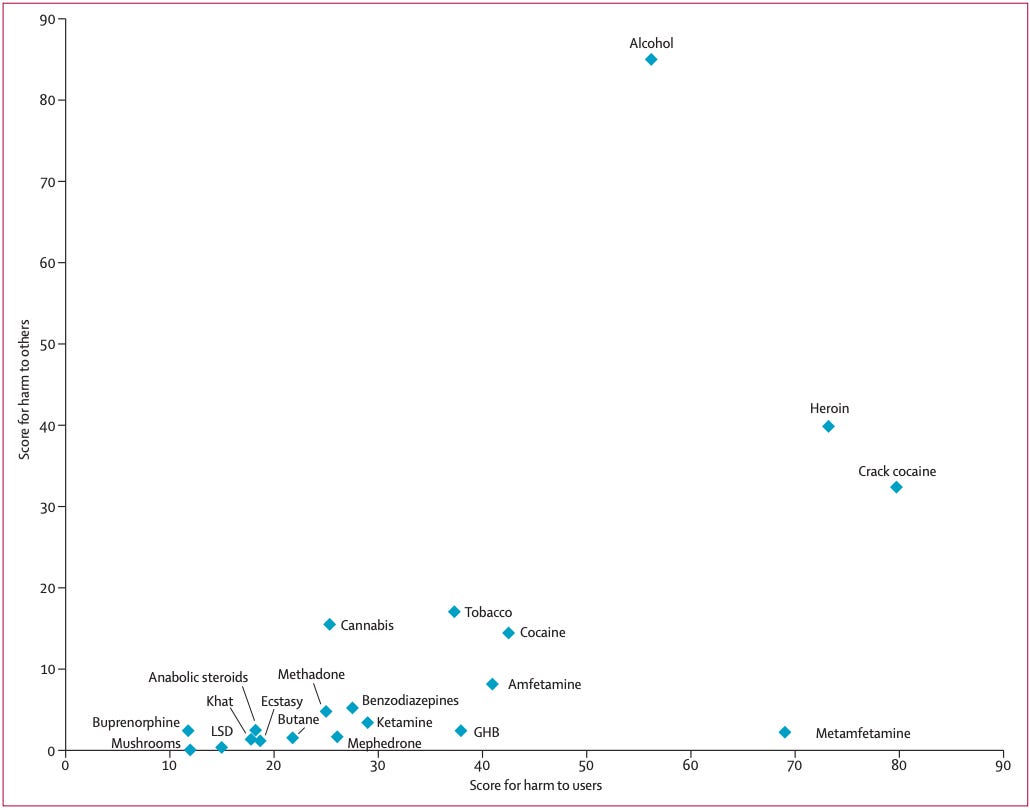
Remarkably, the two legal drugs rank high in harm scores, whereas psychedelics, entactogens, and dissociatives rank far lower [src]. One would obviously expect a zero-tolerance recommendation for nicotine and alcohol, especially given alcohol's negative societal impact. While the dramatic extent of the loneliness epidemic is covered later on, it is worth noting that alcohol in particular fosters social bonds. A recent headline in The Economist read: “Falling wine sales reflect a lonelier and more atomised world” [src]. Is sitting together with friends, drinking and smoking, actually less harmful than being alone and sober?
More nuance is found when we dive into the history of chemical intoxication. The desire to escape sobriety may not be an evolutionary mistake or a societal shortcoming. In fact, it can help solve a number of distinctively human challenges: enhancing creativity, alleviating stress, and building trust. It is a fair guess that we would not have civilization without intoxication [src]. Another stimulant believed to have catalyzed modern civilization is coffee. The spread of rationalism throughout Europe during the Enlightenment was mirrored by the popularization of coffee. Indeed, it replaced the most common beverages of the time, which “even at breakfast, were weak ‘small beer’ and wine” [src]. The health benefits or risks of coffee have long been debated, with a consensus slowly emerging: “moderate coffee consumption—typically three to five cups per day—is associated with reduced overall mortality and lower risk of major diseases such as cardiovascular diseases, diabetes, stroke, respiratory conditions, cognitive decline, and potentially several types of cancer, including liver and uterine cancers" [src].
The human species is not the only one to know about altered states of being and to crave them. Within the animal kingdom, “getting high” is no rarity and has been documented. For instance, early primates’ ethanol consumption from fermented fruits, alcohol self-administration by elephants, vervet monkeys on the Caribbean island of St. Kitts and their problems with alcohol, the effects of catnip on most domestic cats, opium-eating wallabies, jaguars consuming Yage vine, one of the ingredients of ayahuasca, and dolphins consuming the toxins of pufferfish. See [src].
In closing this section, perhaps the best happiness recommendation regarding intoxication is as follows: Avoid mindless or solitary consumption of substances, be observant and honest in your use, optimize your choice of intoxicant, and be aware of the set and setting.
2. The Mental Pillar
Here, we move from the physical world to the mental world, tracing the arc of scientific spirituality. Essentially, the first step towards spirituality is a willingness to engage with one’s own consciousness. It is also an invitation to face one’s self with compassion.
2.a. Looking Inward
Self-compassion is the ability to be kind and understanding towards ourselves, especially when we are suffering. The concept has existed in Eastern philosophical thought for centuries and only recently reached the West [src]. Research shows that many adults harbor unresolved trauma from their childhood [src]. While the detrimental impacts of physical and mental abuse, along with neglect, are severely confining, many experienced traumas are less obvious and not always intentionally caused. Psychedelic-assisted therapy has been shown to be a promising catalyst of transformation, fostering self-compassion [src].

Mindfulness is a central practice of inward attention. It can be defined as “the awareness that emerges through paying attention on purpose, in the present moment, and nonjudgmentally to the unfolding of experience moment by moment” [src]. Historically, mindfulness is an essential part of Buddhist meditation practice, lying at the core of the teachings of the Buddha [src]. Studies have demonstrated improved emotional regulation, reduced anxiety, and enhanced stress resilience following mindfulness practices [src]. The Mayo Clinic, focused on integrated healthcare, describes a wide array of benefits from mindfulness meditation: stress reduction, anxiety relief, pain relief, depression management, improved sleep, lower blood pressure, diabetes management, and asthma management [src]. The clinic recommends the following exercises:
Pay attention. Try to pause and experience what is around you. Use all your senses: touch, sound, sight, smell, and taste.
Focus on your breathing. This helps distract your mind from overwhelming or negative thoughts. Take a deep breath and close your eyes. Focus on your breath as it moves in and out of your body.
Live in the moment. Breathe, look around you, and be present in the moment. Try to pay attention to your environment, your senses, and what your body feels. Do this with no judgment, only observe.
Check in with your body. Turn off screens and phones. Find a quiet place, and notice how your body feels. Mentally scan your body. Start at your head or feet. Notice each part as you move through your entire body.
Mindful walking. Walk slowly and notice the feeling of each step. Pay attention to how your feet work to move and balance your body. Be aware of your environment and your senses.
Meditation is an ancient and versatile technique for modulating consciousness. The practice comes in many forms: cultivating a quiet mind, stepping behind the narrative mind by observing one's inner dynamics, reciting mantras, or visualizing images. Over two decades of neuroimaging studies have uncovered the dramatic effects meditation has on the brain. A landmark 2004 study revealed unprecedented high-amplitude gamma-wave synchrony during compassion meditation (generating a state of ‘‘unconditional loving-kindness and compassion’’), far beyond anything previously recorded in non-meditating subjects, and correlated with the years of practice [src]. Remarkable neuroplastic changes have been documented as a result of meditation practice [src1, src2, src3, src4, src5, src6], alongside changes in functional connectivity [src1, src2]. While seasoned meditators can accumulate 60,000 hours of practice [src], even a modest amount of meditation can induce neuroplasticity. Just eight weeks of mindfulness meditation training in meditation-naïve subjects has been shown to produce measurable neuroplastic changes [src1, src2]. It is a remarkable fact that simply training one's mind can change the structure and functioning of the brain, a striking mind-body link.
Meditation is a skill that requires much practice, and among the many techniques available, one needs to find the one that feels right. Thus, a simple happiness recommendation is to focus on mindfulness, an easy practice to implement anytime, anyplace. Try to learn to meditate.
2.b. Mental Hygiene
While meditation is a focused practice, cultivating certain general habits of mind can further foster well-being. Some are remarkably simple and powerful, even if they might sound like self-help clichés:
Gratitude. In most situations in life, there are always things to be thankful for. For instance, how many people are grateful for waking up without pain or in a country not plagued by war? Who is thankful to their sensory organs and the experiences they relay? How many people appreciate the beauty and intelligence in nature?
Be authentic. In our culture of performative superficiality, authenticity is a rare but powerful virtue.
Do not care what others think. Do not root your self-worth in the opinions of others. Liberate yourself from status expectations and examine which social norms are worth keeping.
Don't judge. It is a helpful reframing to realize that most people do not want to cause harm or be cruel. Nearly everyone tries to do the best they can given their current situation and capabilities, even if the results can be terrible. You can never know what hardship a person is experiencing, which can severely affect their behavior.
Be honest. Lying corrupts the liar, their relationships, and the social fabric.
Learn to sit with yourself. Silence and solitude are becoming scarce resources in an ever-louder world, worth deliberately cultivating [src1, src2].
Be humble. No matter how clever and well-educated one feels, one is still always subject to cognitive biases, irrational thinking, and false beliefs. My experience in this respect is presumably representative of many: I regularly catch myself saying or doing something stupid.
Don’t lose your sense of humor. Humor appears to be linked to greater enjoyment of positive life experiences and a more positive orientation towards oneself [src]. However, there is a difference between light and dark humor [src].
Don’t take things too personally. Sometimes the issue lies not with you but with the other person who is projecting onto you what is unresolved in themselves.
Don’t take things too seriously. Often, what seems like a desperate or momentous situation turns out to be far less impactful. The threat itself can be a construction of the mind rather than a feature of reality. For example, the spotlight effect is a psychological phenomenon in which people tend to believe they are being noticed, judged, and remembered more than they actually are [src].
See the world through fresh eyes. Remove the lens of dulling familiarity.
Be brave. Stand up for what you believe to be right and foster moral courage.
Don’t regret. Regret is a useless state of being. The past cannot be changed. However, it can be integrated and transform who you are becoming.
Trust. This aspect will be discussed in the metaphysical pillar below.
A good way to gauge your inner state is to observe how you react when you don't get what you want or when things don’t go as you wanted. Here you may discover a reflection of what needs attention and transformation.
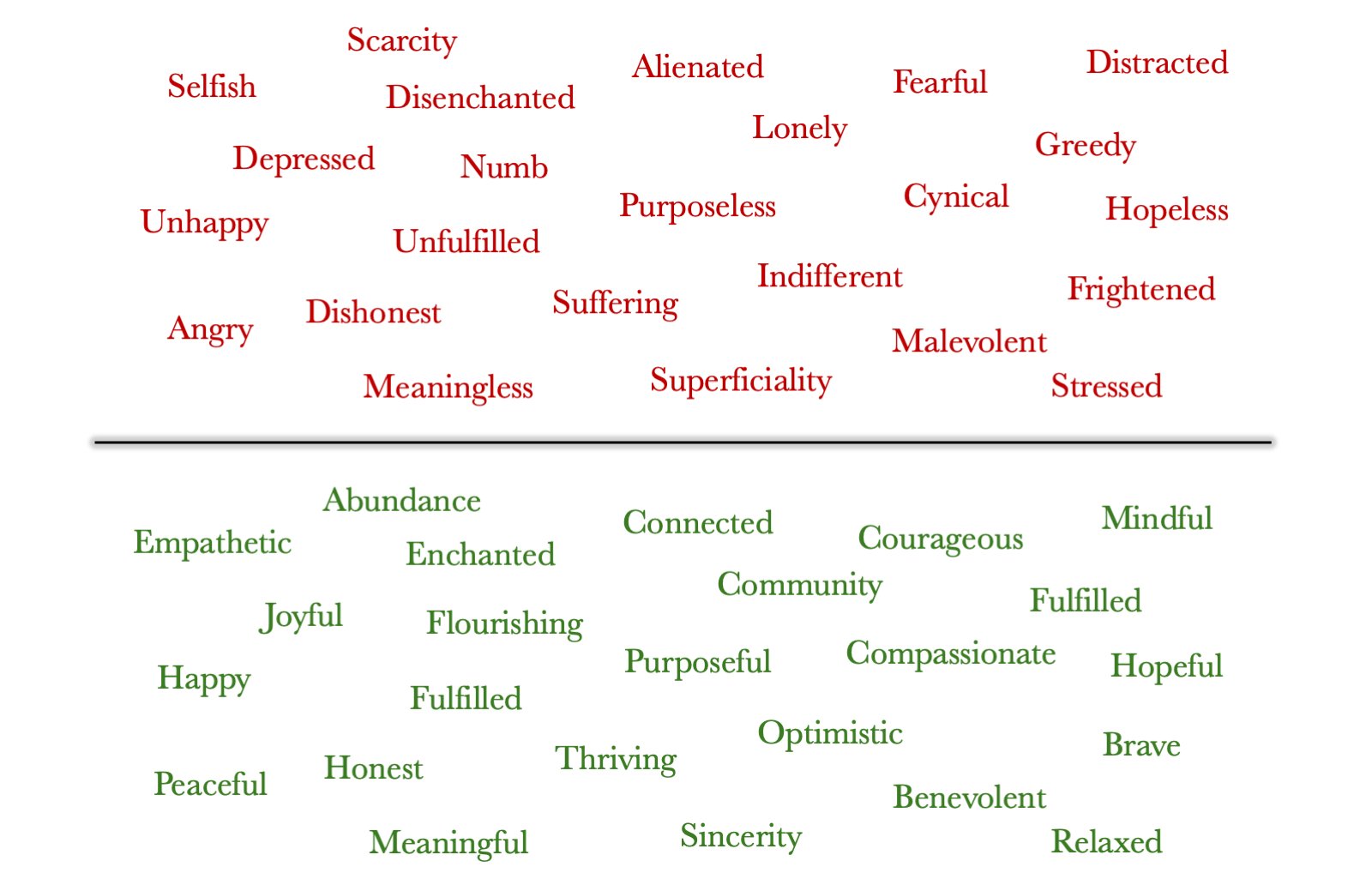
Perhaps the most powerful mental habit is to assess every situation by asking: “Can I change this?” If yes, act. If not, release it. This ancient Stoic insight, articulated by Epictetus, also known as the dichotomy of control [src], remains one of the most practical tools for psychological resilience. Modern cognitive-behavioral approaches are influenced by such views [src].
The Eightfold Path of Buddhism, aimed at reducing suffering, includes:
Right Intention. Cultivating genuine goodwill toward all beings, wishing them happiness and freedom from suffering, while releasing tendencies toward greed, aversion, and harm.
Right Speech. Communicating with honesty, kindness, and purpose. Refrain from lying, slander, gossip, and idle talk, and speak in ways that are true, gentle, and useful.
Right Action. Live by the five principles of non-harming: refraining from harming sentient beings, taking what is not freely given, sexual misconduct, false speech, and intoxication.
Right Livelihood. Earning one’s living in a way that contributes to rather than undermines the well-being of others.
Right Effort. Deliberately cultivating wholesome states of mind and releasing unwholesome ones, practicing generosity and patience as antidotes to delusion.
Right Mindfulness. Extending meditative awareness into everyday life, restraining the mind’s impulse to judge reflexively, reducing its appetite for stimulation, and sharpening attention to the present moment.
Right Concentration. Setting aside dedicated time each day for formal meditative practice, deepening the quality of attention that mindfulness cultivates in daily life.
The right action principle to refrain from intoxication merits a note. It is not clear if the prohibited intoxicants also cover entheogens or only fermented and distilled products, “which are the basis for heedlessness” [src]. Indeed, entheogen use has been documented in early Buddhist contexts, with cannabis, Psilocybe cubensis, fly agaric, and Datura among the candidates [src1, src2]. Interestingly, Bön, Tibet’s indigenous pre-Buddhist shamanic tradition, and Indian Buddhism entered into a complex relationship of mutual influence upon the arrival of Buddhism in Tibet in the 7th century CE, significantly shaping Tibetan Buddhism. However, Buddhist rulers systematically marginalized Bön, but the tradition nonetheless demonstrated remarkable resilience [src]. Overall, the entheogenic dimensions of early spiritual traditions and the role of shamanism in shaping human spirituality across cultures deserve far greater recognition.
Greed is a particularly harmful mental state. In Buddhism, greed is seen as one of the root causes of suffering, an insatiable hunger leaving one perpetually unsatisfied. The Buddhist Wheel of Life offers a colorful picture thereof: the realm of hungry ghosts. These are tormented beings condemned to perpetual craving, with their bloated bodies forever denied satisfaction by their constricted mouths. Whatever nourishment they manage to consume turns to ash or flame the moment it reaches them. They are the embodiment of desire that can never be fulfilled. Most obviously, when humans face death, the accumulation of material wealth in the past appears fruitless and hollow.

In our modern world, greed is deeply woven into the fabric of society. The history of money is also the history of human psychology and ethics, in which self-interest is pitted against cooperation. Greed and fraud promise short-term enrichment but threaten the long-term development of an equitable and sustainable society living in ecological balance with the biosphere [src]. Modern capitalism traces its intellectual roots to Adam Smith's 1776 treatise “An Inquiry into the Nature and Causes of the Wealth of Nations” [src]. Later neoclassical interpretations of Smith posited a universal order akin to the immutable laws of nature [src], embodied in the all-powerful and all-knowing “invisible hand” guiding markets through self-interested competition [src]. The implication is striking: greed is good, and egoism is altruism. The Russian-American novelist-philosopher Ayn Rand declared in “The Virtue of Selfishness” that overt self-interest is the prime moral virtue and redefined altruism as evil [src].
This perspective is particularly unfortunate, as happiness economics [src], a surprisingly fringe topic in the field, has found:
Individuals do not value absolute income but compare it to their peers' income [src].
Once one earns $50,000 a year, $100,000 seems like it would bring real satisfaction. But once $100,000 is reached, the target shifts to $200,000, and the pattern repeats indefinitely. The anticipated gain in well-being from each additional dollar never seems to materialize as expected [src].
At low income levels, a rise in income strongly increases well-being. But once an annual income of about $150,000 is reached, a rise in income has a smaller effect on happiness. Higher income is still associated with improved well-being, but at a lower rate. In Switzerland, the pattern inverts entirely at the top: the highest earners report slightly lower well-being than those just below them [src].
A landmark 1978 study compared lottery winners with paralyzed accident victims, finding that neither group's happiness matched expectations. The winners were no happier than controls and took less pleasure in everyday life. The accident victims, despite rating their past as far happier, still reported above-midpoint well-being. Happiness, it concluded, is relative, and habituation blunts the impact of even life-changing events [src].
Even The Economist observed [src]:
So levels of income are, if anything, inversely related to felicity. Perceived happiness depends on a lot more than material welfare.
A strongly corrupting force is the greed for power. This is a dysfunctional urge that clouds judgment, erodes empathy, and consistently causes suffering for those who pursue it and those subject to it. The classic aphorism is that power tends to corrupt, and absolute power corrupts absolutely [src]. The paradox of power emerges [src]:
The skills most important to obtaining power and leading effectively are the very skills that deteriorate once we have power.
While charisma, charm, the ability to inspire, persuasiveness, breadth of vision, willingness to take risks, grandiose aspirations, and bold self-confidence are associated with successful leadership, they have a dark side: impetuosity, a refusal to listen to or take advice, and a particular form of incompetence when impulsivity, recklessness, and frequent inattention to detail predominate [src]. There is a hormonal component to this power-seeking and risk-taking behavior [src1, src2]. Research suggests that individuals with psychopathic tendencies are somewhat more likely to emerge as leaders, that these individuals are somewhat less effective leaders, and that women are penalized for the same tendencies men are rewarded for [src]. The detrimental effects of appointing a psychopathic CEO have been documented [src]. Surrounded by sycophants, such individuals can wield immensely destructive power, especially in politics [src1, src2].
Thus, another important habit to cultivate is:
Beware of all forms of greed. The hedonic treadmill ensures that satisfying desire only generates more desire, and the pursuit of power is particularly corrupting, clouding judgment and eroding empathy. Appreciate your situation in life and resist the urge to always want more and control others.
The happiness recommendation is simple: Cultivate good habits of mind. Be kind to yourself. Appreciate what is good in your life. Be understanding of others. Know what to change and what to accept.
Note: The path to happiness is not without its dangers. People seeking transformation can be exploited financially or become dependent on a guru. Spirituality can also have dark sides. Spiritual delusions are tragic distortions of genuine insight. The spiritual ego can inflate one’s sense of self rather than foster true humility. Alan Watts warns us of spiritual one-up-man-ship [src]:
[…] my guru is more effective than your guru. My yogas are faster than your yoga. I am more aware of myself than you are. I am humbler than you are. I am sorrier for my sins than you are. I love you more than you love me.
The psychologist Carl Gustav Jung called the unacknowledged parts of the psyche the shadow [src]. These are hidden aspects of the mind comprising traits, impulses, and desires we refuse to acknowledge in ourselves. Shadow work entails bringing these elements into consciousness and integrating them.
2.c. Combating Fear and Anxiety
Fear and anxiety disorders are among the most powerful modulators of human behavior. While fear has an evolutionary function in the fight-or-flight response, it is a maladaptive response in most modern human contexts. Anxiety is a future-oriented response to a perceived, anticipated, or imagined threat. Chronic fear, anxiety, and worry severely constrain human flourishing, hindering the unfolding of spirituality.

Unfortunately, inciting fear and sparking outrage lie at the heart of our digital attention economy. The algorithms quickly learned that these emotions optimize engagement [src]. Fear is also central to political polarization. Neuropolitics is an interdisciplinary field combining neuroscience, political science, and psychology to investigate how brain activity and cognitive processes influence political attitudes, decisions, and behavior. Overall, “fear flourishes mostly among the extremes” [src].
Specifically, conservatives tended to register greater physiological responses to negative aspects than their more liberal counterparts, and were more likely to remember things that evoked negative emotions, like images of war, snakes, and road kill [src1, src2]. A meta-analytic review of 88 studies conducted in 12 countries between 1958 and 2002 observed [src]:
Specifically, death anxiety, system instability, fear of threat and loss, dogmatism, intolerance of ambiguity, and personal needs for order, structure, and closure were all positively associated with conservatism (or negatively associated with liberalism). Conversely, openness to new experiences, cognitive complexity, tolerance of uncertainty, and self-esteem were all positively associated with liberalism (or negatively associated with conservatism).
In terms of brain anatomy, differences in the volumes of the anterior cingulate cortex and amygdala were associated with greater liberalism or conservatism [src1, src2]. These regions are involved in conflict monitoring and physiological responses to threat. Recall that mindfulness meditation has documented effects on these parts of the brain [src]. Furthermore, religious thinking is associated with brain regions that govern emotion, self-representation, and cognitive conflict [src]. While these insights will never close the ideological divides, it is perhaps consoling to know that your political and metaphysical enemy is not simply motivated by misguided beliefs or moral failing, but by genetic and environmental factors that shape individual neural networks.
Paranoid ideation is a pattern of thinking characterized by persistent, unwarranted suspicion and distrust of others, such as believing one is being watched, treated unfairly, or targeted for harm. It is a fatal misreading of the world associated with significant psychological distress and social dysfunction [src]. Paranoid ideation is common among individuals with psychotic disorders [src]. Repetitive negative thinking is associated with cognitive function decline in older adults [src].
Cognitive-behavioral therapy and mindfulness-based interventions are treatments for anxiety disorders [src1, src2]. At the physiological level, as discussed, diaphragmatic breathing directly counters the fight-or-flight response in real time. The deepest antidote to fear, however, may be philosophical rather than clinical. Namely, a shift in one's fundamental relationship to reality. This is where the mental pillar opens naturally into the metaphysical one. Thus, the happiness recommendation is to trust in the process of life. A metaphysical re-contextualization that helps foster such an attitude is proposed in Section 4.d., which discusses purpose.
2.d. Seeking Truth
The rise in the popularity of conspiracy theories mirrors the rise in anti-intellectualism that has been diagnosed for some time now. The historian Richard Hofstadter wrote a Pulitzer Prize-winning book in 1963 called “Anti-Intellectualism in American Life” [src]. Nearly two decades later, the prolific science fiction writer Isaac Asimov would lament in a Newsweek article, aptly titled “A Cult of Ignorance" [src]:
There is a cult of ignorance in the United States, and there always has been. The strain of anti-intellectualism has been a constant thread winding its way through our political and cultural life, nurtured by the false notion that democracy means that “my ignorance is just as good as your knowledge.”
46 years later, the issue today seems more ubiquitous and systemic than ever.
Some of the tactics that are successfully employed to gain support for conspiracy theories include [src]:
Cherry-picking facts and quote mining.
Constructing straw-man arguments and misrepresentations of science.
Fabricating analogies supporting the claims.
Invoking fringe science.
Offering simple solutions to complex issues.
Discreditation tactics and character assassination.
Instilling a sense of uncertainty and confusion.
Subtle evasion tactics.
Relentlessly spamming the Internet with claims (“flooding the zone” [src]), especially if they have been disproven and debunked.
Gish gallop, a rhetorical tactic in which a debater overwhelms their opponent with a rapid barrage of arguments, regardless of their accuracy or merit, at a pace that makes thorough rebuttal practically impossible. It is named after the creationist Duane Gish.
Pathological lying.
While conspiracy theorists may seem sincere and passionate in their claims, often, behind the veneer of ideology and fervor lies a banal motivation: grifting. This is the art of monetizing lying.
A remarkably persistent and damaging conspiracy theory was introduced by Dr. Andrew Wakefield. In 1998, he published an article in the prestigious medical journal The Lancet, pointing to a link between autism and MMR vaccines [src]. However, in 2010, The Lancet fully retracted the publication when Wakefield’s research was found to be fraudulent. He had multiple conflicts of interest, manipulated evidence, and broke ethical codes [src1, src2]. As a consequence, he was struck off the UK medical register and was barred from practicing medicine in the UK. Nonetheless, the link that vaccines cause autism has stuck in the public’s collective mind. Unsurprisingly, to the conspiracy-minded, Wakefield is a martyr unjustly prosecuted by the evil scientific establishment in an effort to hide the truth about autism and vaccines. He is currently enjoying a surge in popularity [src].
A simple framework for evaluating the validity of ideas is the following:
What are the sources of the claims being made? Are they trustworthy? Is there an agenda, be it commercial or ideological?
Who is disseminating the claims? Do they seem trustworthy, competent, and informed? Can their credentials be verified?
Does broader support exist, or are the assertions simply contrarian? Does only a single person or group claim authority?
Are the ideas promoted through fear or the vilification of established institutions?
Who is profiting from the claim?

While some conspiracy theories have proven to be true, this does not imply that every conspiracy must also be true. In fact, from a complex systems perspective [src], the idea that covert top-down control will successfully steer the evolution of a system is highly doubtful [src]. A hallmark of most forms of evolution is decentralized self-organization [src1, src2]. Moreover, reality is characterized by inherent uncertainty and ambiguity [src], and attempts to reduce it to simple explanations and mechanisms are not only futile but epistemically dishonest.
The psychologists David Dunning and Justin Kruger peered deep into the human psyche and found a remarkable but disturbing pattern [src]. In an act of existential irony, grossly incompetent individuals lack the skill to assess their own inability. This leads to an inflated and distorted self-perception. In contrast, highly competent people are troubled by doubt and indecision, resulting in a self-conscious and deflated perception of themselves. Tragically, society is thus threatened by the “unskilled and unaware,” convinced of their competency. This is particularly harmful when a majority of the population confuses confidence with competence.
Paranoid ideation is often found among people who believe conspiracy theories [src]. Unsurprisingly, narcissism is a robust predictor of the belief in conspiracy theories [src] (while narcissism itself can be a coping strategy for trauma [src]). The digital economy further amplifies conspiratorial thinking through algorithmic filter bubbles [src] and echo chambers [src].
Embedding oneself in a constructed world in which everyone is lying to you or concealing the truth from you is a highly toxic mindset, guaranteeing misery. On the contrary, striving to know the truth, or its best current approximation, is a great virtue, requiring much self-awareness, self-reflection, and self-critique. Genuine intellectual honesty is a rare and powerful virtue. A simple happiness recommendation is to remain constantly aware of one's own cognitive biases and the prevalence of misinformation and disinformation. Resist the allure of simple explanations for complex issues. Always look for nuance, as reality is never black-and-white.

3. The Relational Pillar
Complexity theory teaches us to understand all of reality as an interconnected web of interactions [src]. As humans, we are embedded in multiple networks of environmental and social ties. Indeed, humans are social animals [src] and socially transmitted behaviors have shaped our culture [src]. Nothing on Earth exists in isolation, as everything is woven into the web of life [src]. A quote sometimes attributed to Banksy summarizes the issues:
We were all humans until race disconnected us, religion separated us, politics divided us, and wealth classified us.
3.a. Social Connection
It is a bitterly ironic tragedy that in our hyperconnected world, an increasing number of people are experiencing the detrimental effects of the loneliness epidemic. Robust evidence now confirms that social connection is a significant predictor of longevity, and that its absence poses a greater mortality risk than many factors that dominate public health attention, including obesity, physical inactivity, and air pollution [src1, src2]. Social isolation affects a substantial and growing proportion of the adult population [src].To address the problem, some governments have appointed “Loneliness Ministers” [src].
Loneliness in old age is sadly prevalent in industrialized nations [src], where traditional social support structures have weakened. Recall that a hallmark of Blue Zones is the existence of strong social bonds and active community participation. Intrafamily ties are cultivated next to belonging to a faith-based community [src].
Research suggests that addiction should also be reframed in terms of social connections. “Rat Park” is the name given to a series of studies beginning in the 1980s, showing that rats living in a social environment were less likely to self-administer oral morphine than those housed in isolation [src]. Social and environmental enrichment is thought to have a protective effect against addiction in humans as well [src]. Perhaps the opposite of addiction is not sobriety, but connection [src].
Building or rebuilding connections can be a challenge, and some proposed strategies are [src]:
Gratitude. Writing down, every day, five things we truly appreciate can improve our subjective well-being and reduce our feelings of loneliness. Cultivating gratitude is a potent way to switch off the inner critic that isolates you from others.
Reciprocity. From an evolutionary perspective, we’re wired for mutual aid and protection. Feeling useful and needed eases feelings of isolation. One of the best ways to help ourselves is to help others.
Altruism. Generously offering your time or resources helps divert self-focused ruminations, a hallmark of the lonely mind. Altruism is about sharing: life experiences, wisdom, and direct assistance are also valuable gifts. This is why volunteering can be a great way to enhance feelings of connectedness.
Choice. Understanding that we have some choice about how we feel is important. Just as we make choices about food and exercise, we can choose to work toward a positive mindset.
Enjoyment. Describing what they call the critical positivity ratio, positive psychologists argue that it takes three positive stories to counter every negative one.
Since the first shamans gathered around a fire to chant and drum, music has been a universal connector of humans. This archaic spirit can still sometimes be found at modern transformational festivals [src], with guidelines that can emphasize participation, immediacy, and radical inclusion [src]. Dancing is simultaneously a solitary embodied experience and a collective one where each person is connected by the shared rhythm. Here, targeted intoxication can be of benefit, as inhibitions and self-consciousness are hurdles to dissolving into the collective.

Connectivity further implies the inclusion of marginalized elements of society. A truly enlightened society would never ignore, exploit, stigmatize, or vilify the people living at the margins of its social network [src]. Even in the animal kingdom, highly social species can display remarkable empathy, actively supporting their weak, sick, or injured [src], with cross-species empathy seen as a major evolutionary step for group-living animals [src]. Indeed, research suggests that altruism and cooperation are one of the most successful evolutionary templates [src1, src2, src3, src4, src5, src6].
Healthy social connections crucially also have their limits. Often, the only fruitful response to a toxic relationship is to sever the connection, whether with family, friends, or colleagues. We can only prosper if we clearly draw boundaries and are willing to defend them. This mirrors the philosopher Karl Popper’s paradox of tolerance [src]. A tolerant society must be intolerant towards intolerance. In the same vein, a paradox of benevolence follows: hostility towards unkindness is not a contradiction but a healthy response.
The happiness recommendations are varied. Find social activities in your town or city utilizing online or other resources. Volunteer, join a club, attend community events, or simply make a habit of regular contact with friends and family. Join a sports community. Go and dance. However, while social connection is nourishing, there are limits. Stand firm in social exchanges and walk away from toxic ones.
3.b. Ecological Connection
We already covered the well-being benefits of Shinrin-yoku above. In general, green spaces can provide mental health benefits and lower the risk of psychiatric disorders, while growing up in urban environments is associated with an increased risk [src]. Indeed, urbanization, the ongoing mass shift from rural to urban living, has been associated with psychotic disorders, including schizophrenia [src1, src2, src3]. In 2025, cities were home to 45% of the world’s 8.2 billion people, more than double the 20% share in 1950 [src].

The philosopher Jean-Jacques Rousseau, writing in the 18th century, diagnosed something that empirical research has recently confirmed. In his “Reveries of a Solitary Walker” [src], he described the restorative power of immersing in nature: the quieting of the restless mind, the recovery of a simpler, more immediate contact with existence. His broader philosophical project positioned civilization itself as the source of human suffering, alienating humanity from the natural conditions under which it had evolved [src]. The modern data on urbanization suggest he was not merely romanticizing, but was identifying a genuine pathology of the civilized condition, one that has only deepened in the centuries since. Connecting to nature also crucially encompasses our relationship with all sentient beings.
This places our general conduct and habits of consumption at the center of our moral responsibilities. It is worth being mindful of how destructive one’s behavior can be to the web of life, both directly and indirectly, intentionally and unintentionally. Unfortunately, many people have severed their elementary connection to nature. This is most visible in the littering of natural spaces or the careless damage inflicted on trees, bushes, and flowers. As our collective crisis deepens, such behaviors appear to be intensifying.
The happiness recommendations are practical. Seek out green spaces, parks, forests, and bodies of water as a deliberate part of daily life rather than an occasional retreat. Tend a garden. Walk without a destination. Sit with a tree. Walk barefoot in a meadow. Take time to absorb the beauty of a natural landscape. Pet an animal [src]. These are not indulgences but biological necessities, the conditions under which the human nervous system evolved and to which it continues to respond. In re-establishing a connection with the natural world, one returns to a broader reality context than one's usual highly curated and restricted versions.
3.c. Play and Leisure
“Homo ludens”, the playing man, is a book published in 1938 by the historian and cultural theorist Johan Huizinga [src]. It discusses the importance of the play element in culture and society, suggesting that play is primary to, and a necessary condition for, the generation of culture. In the animal kingdom, scholars originally thought that only mammals had the cognitive ability to play. Play behavior has been observed in most vertebrates and some invertebrates [src] and, more recently, even in bees [src].
Octopuses are seemingly alien life forms with three hearts, skin that acts like an organic display by changing both color and texture, and a distributed nervous system with two-thirds of their neurons residing in their eight semi-autonomous arms [src1, src2]. They regularly use tools and can solve puzzles [src]. Their playful behavior has also been documented [src]. Some anecdotes are quite remarkable [src]:
Octopuses in at least two aquariums have learned to turn off the lights by squirting jets of water at the bulbs when no one is watching, and short- circuiting the power supply. At the University of Otago in New Zealand, this became so expensive that the octopus had to be released back to the wild. A lab in Germany had the same problem.
Philosophers of mind and psychologists have wondered about octopus consciousness, specifically whether it might be highly dissimilar to the unified conscious experience typically associated with vertebrate brains [src1, src2]. In cruel contrast, more and more consumers are discovering octopuses as a culinary delicacy, giving rise to commercial octopus farming [src].
Humans and animals engage in play at a young age, an activity with evolutionary, developmental, and functional aspects that are essential for learning, skill development, and social bonding [src]. Unfortunately, as humans grow older, societal norms dictate more seriousness. A derisive "Don't be silly!” is the cultural verdict on foolishness in adulthood, as if the capacity for play, curiosity, and wonder were liabilities to be outgrown rather than faculties to be preserved. In contrast, cultivating your inner child involves reconnecting with your younger self’s joy, creativity, and natural playfulness. It is a therapeutic tool helping to heal past wounds through self-compassion [src]. Indeed, being young at heart correlates with better physical health, cognitive function, and longevity [src].
In keeping with the earlier advice not to care what others think, the happiness recommendation is simple. Dare to be silly and childish throughout your entire life and resist the natural tendency to become cynical and callous. A very liberating mental practice is to not take oneself too seriously. Dare to laugh at yourself and life's absurdities. As the philosopher of mind, Thomas Nagel [src1, src2], pointed out, “we can approach our absurd lives with irony instead of heroism or despair” [src]. Or as Oscar Wilde tells us: “Life is far too important a thing ever to talk seriously about it” [src].
3.d. Altruistic Joy
The term comes from the Buddhist concept of mudita, also translated as sympathetic joy or appreciative joy. It is the capacity to take genuine pleasure in the well-being and happiness of others. Mudita is also a corrective to the Randian position addressed earlier in this guide. Societies that declare overt self-interest the prime moral virtue inevitably cultivate greed and envy. Altruistic joy is a powerful antidote.
The case for altruistic joy rests on both philosophical and empirical grounds. Philosophically, as we are embedded in an interconnected web of relationships, the flourishing of others is not separate from our own. Empirical evidence can also be found. Prosocial behavior, meaning acts of generosity, kindness, and contribution to others, is a predictor of subjective well-being [src1, src2]. Prosociality affects eudaimonic well-being more than hedonic well-being [src]. Volunteering is associated with mental health benefits and reduced mortality risk [src]. Deliberate acts of kindness can be positive for well-being [src]. The “helper's high” refers to the rush of euphoria, increased energy, and physical warmth that can accompany helping others, followed by a long-lasting period of calm and relaxation [src]. The neural mechanisms of how prosocial behavior induces psychological and physical well-being have also been investigated [src1, src2]. The World Happiness Report includes a chapter dedicated to happiness linked to prosocial behavior [src].
The practical implication is counterintuitive in a society organized around self-interest: the most reliable path to personal happiness may be the deliberate cultivation of joy in others’ joy. In such cultural contexts, altruism is indeed perhaps best reframed as egoism. The happiness recommendation is clear. Try to be gentle, kind, understanding, courteous, forgiving, and generous. Help others. Smile. In contrast, being selfish and cruel not only negatively impacts society but also consistently leads to personal misery and suffering.
4. The Metaphysical Pillar
The pillars of physical foundation, mental practice, and relational embedding address the conditions for a life well lived. But conditions are not foundations. Beneath them lies something prior: the existential belief structure through which we interpret existence. We all hold some sort of metaphysical belief about existence.
The metaphysical pillar allows the other ones to flourish. Without this foundation, no amount of healthy living, mental practice, or connection will coalesce into a holistic vision of what it means to live a happy life. It is an answer to the question of how we meet existence itself.
Idealism offers fertile metaphysical ground. It is both rationally defensible and experientially accessible. It is a vision that has been part of human culture since the dawning of the human mind, meandering through history, sometimes unseen. The Western mind is now rediscovering it.
It is here that scientific spirituality is most effective, not as a doctrine, but as a living orientation. At its core, it is a fundamental re-contextualization that can transform every aspect of life. Suffering, death, meaning, and purpose take on new liberating forms.
4.a. Suffering
Suffering is intrinsic to the human experience, acknowledged in Buddhism's First Noble Truth. Should suffering always be avoided, or does it have a function? Does it point to something evil at the heart of reality? Some observations offer clarification.

We inhabit a reality shaped by dualities. The concept of "left" makes no sense if it cannot be delineated from "right." In this sense, bliss, happiness, and joy are meaningless without an opposing experiential context to give them shape. As such, suffering is a required ontological category that belongs to the very structure of experiential reality. However, as suffering is experiential, it can and should be re-contextualized.
Here, we can choose to listen to the mystics and psychonauts reporting on the loving intelligence underlying physical reality [src1, src2]. The implication is clear: evil is not an ontological category but the absence of love. Analogously, darkness is not a thing-in-itself, but the absence of light. Suffering belongs to the structure of experiential reality, but the concept of evil belongs to a misreading of that structure. In a theological context, Saint Augustine argued that evil has no physical substance of its own: “What is called evil in the universe is but the absence of good” [src].
Does suffering have a purpose? Joseph Campbell, a scholar of comparative mythology and religion, identified a monomyth, a template for all myths from around the world, in the hero's journey [src]. He observes [src]:
The standard path of the mythological adventure of the hero is a magnification of the formula represented in the rites of passage: separation—initiation—return: which might be named the nuclear unit of the monomyth.
Initiation is characterized by an intense struggle and much suffering. It can be a life-and-death situation. Only by braving the existential trials does the hero return, reborn and bestowed with new powers.
Mircea Eliade describes a shaman's vocation as following the same archetypal schema: suffering, symbolic death, and resurrection [src]. In these traditions, "shamanic illness" is a profound spiritual, psychological, and physical crisis accompanying a person's call to become a healer. Eliade observes that this sickness-initiation brings on suffering that corresponds to initiatory torture. Moreover, "the immanence of death felt by the sick man recalls the symbolic death represented in almost all initiation ceremonies” [src].
The anthropologist Michael Harner describes in detail his initiation in the 1980 book "The Way of the Shaman," which brought shamanism to a wider audience [src]. The chosen path of the Jivaroan peoples who initiated him was entheogenic, utilizing Datura, a poisonous plant and strong deliriant. Datura is known for inducing nightmarish and hellish experiences that can feel indistinguishable from reality, potentially inflicting psychedelic trauma [src1, src2]. Harner was warned: "What is most important is that you have no fear. If you see something frightening, you must not flee.” He was also reminded that the ordeal could kill him. Harner recalls the effects of drinking the Datura brew [src]:
Suddenly, about two hundred feet away amidst the tree trunks, I could see a luminous form floating slowly toward me. I watched, terrified, as it grew larger and larger, resolving itself into a twisting form. The gigantic, writhing reptilian form floated toward me. Its body shone in brilliant hues of greens, purples, and reds. […] The serpentine creature was now only twenty feet away and towering above me, coiling and uncoiling. It separated into two overlapping creatures. They were now both facing me. The dragons had come to take me away!
In the context of initiation, understood as a portal to higher states of being, suffering appears not to be an obstacle but the very vehicle of transmission. This points to something deeper: the relativity inherent in all experience. Nothing has a standalone meaning, and everything is contextual.
Drawing from personal observations and experiences, suffering can indeed have beneficial effects. For one, it has the potential to deepen one's being in ways that comfort never could. Moreover, we can never know whether an event that causes suffering also carries within it the seed of something unanticipated and transformative.
Christopher Bache is a professor emeritus of philosophy and religious studies. He began systematically exploring the depths of his own consciousness and that of the cosmos, using LSD as his tool. During two decades, Bache engaged in 73 high-dose LSD sessions, chronicled in the book "LSD and the Mind of the Universe: Diamonds from Heaven” [src]. He reminds us:
Behind creation lies a Love of extraordinary proportions. The Intelligence of the universe’s design is matched by the depth of Love that inspired it.
Yet to access these states of transcendent bliss, Bache had to first traverse "the ocean of suffering.” Over the course of seven sessions, spanning one year, he experienced what he describes as targeted, multifaceted, and unthinkable torment and terror.
More broadly, the contextual nature of suffering implies that the concepts of good and bad also depend on the perspective of the experiencer. Such an insight can be found in the ancient parable of the Chinese farmer [src]:
When his horse runs away, his neighbors rush to commiserate: "What terrible misfortune." The farmer replies only: "Maybe." The next day, the horse returns, bringing seven wild horses with it. The neighbors celebrate: "What wonderful luck!" The farmer says: "Maybe." His son then tries to break one of the wild horses, is thrown off, and breaks his leg. The neighbors shake their heads: "How unfortunate." "Maybe," says the farmer. The following day, conscription officers arrive to draft young men into the army. They pass the son over because of his broken leg. The neighbors congratulate the farmer on his good fortune. He says: "Maybe."
The philosopher Alan Watts adds [src]:
The whole process of nature is an integrated process of immense complexity, and it’s really impossible to tell whether anything that happens in it is good or bad.
The holocaust survivor Viktor Frankl gives us practical advice [src]:
When we are no longer able to change a situation, we are challenged to change ourselves.
The happiness recommendation is layered. First, we need to acknowledge that life inevitably encompasses events that cause suffering. Accept what is inescapable and immutable. And yet, suffering is an experience in consciousness and thus depends on the context in which it is placed. Herein lies the liberation. One can choose to meet suffering as a teacher and transform its meaning entirely. Or, through sustained mental practice, one can ensure that the causes of suffering find no foothold in consciousness, thus dissolving them at the root. A metaphysical re-contextualization of meaning and purpose, discussed below, can further transform one's relationship to suffering.
4.b. Death
Humans experience existence with great metaphysical uncertainty. Are you dreaming right now? Are you living in a simulation? Are you a brain kept alive in a vat, fed electrical impulses mimicking an objective world? And yet, two facts of being appear irrefutable. You are experiencing a reality right now, confirming your existence as a subjective conscious entity. Then, this stream of experiences, woven together by memory and anchored in the timeless moment of “now,” will come to an end one day.

Mortality poses an existential challenge to all sentient beings. Most human cultures have embraced this certainty and integrated it into their worldviews, rituals, and moral frameworks. For instance, “The Tibetan Book of the Dead” serves as a guide for the dying, outlining the stages of death and rebirth. The sacred Hindu cremation rituals performed at the burning ghats of Varanasi promise liberation from the cycle of death and rebirth. The pyramids of ancient Egypt reflected the belief that death is not an end but a transformation into eternal life. In Confucian and Shinto traditions, death does not dissolve family ties, resulting in ongoing rituals of kinship with ancestors. Día de los Muertos is a deeply meaningful and joyful Mexican holiday that honors and celebrates the lives of deceased loved ones. The Abrahamic religions teach of an afterlife whose nature is determined by divine judgment. Across traditions, the existential threat of annihilation is contextually offset by cultural narratives, prompting some scholars to suggest “widespread death anxiety to be not universal but the result of very specific socio-historic formations” [src].
Immortality has been an alluring concept ever since the human mind awoke to its own existence [src]:
Throughout history, people have sought survival or immortality in four main ways. First, by staying alive as long as possible—this is the realm of magic and medicine. Second, by surviving death in some attenuated spirit form—this is the realm of spiritualism and religion. Third, by surviving through our children and children’s children—this is the realm of genetics and family. Fourth, by our works and deeds, embedded in memory and society—this is the realm of memetics and culture.
Humans have a fundamental and universal need to develop and maintain a personal sense of continuity transcending death. People with a sense of symbolic immortality [src] show reduced fear of dying [src]. In essence, the concept is a psychological device for managing the terror of death [src1, src2]. Five modes of symbolic immortality have been suggested [src]:
The first is called the biological mode, and it refers to the sense that one is the continuation of past generations and that one will continue to live in one’s progeny. The second mode, which [the psychiatrist Robert] Lifton calls the creative mode, comes from the sense that one’s work, one’s teaching, and one’s personal influence will live on so that one’s creative contribution to culture and society will not cease after one passes away. The third mode, the natural mode, results from the feeling of being a part of a universe that is beyond oneself. As one is part of eternal nature, one can be assured that something of oneself will continue to live on after death. The fourth mode deals with the possibility of transcending death through spiritual and religious attainments. The main feature of this mode is that it takes the form of a search for a higher plane of existence, in which the self is allowed to transcend its physical finiteness. The fifth mode, called experiential, results from the capacity to lose oneself in other elements of the human flow. This mode is characterized by a psychological state that can take the form of an intense ecstatic peak experience or a more common feeling of being fully alive.
Today's wealthy elites are reimagining immortality in a more literal sense [src1, src2, src3], armed with modern technologies like real-time monitoring, biohacking, and rejuvenation therapies. The entrepreneur and venture capitalist Bryan Johnson's “Don't Die” philosophy is a striking example [src]. From a purely physical perspective, immortality is simply a shortsighted and futile wish. The physical universe is subject to constant entropic decay, ultimately disintegrating all structure. In 10^68 years, the last black hole is predicted to have evaporated, marking the end of complexity [src]. More dramatically, the Higgs field [src] is predicted to tunnel to a different value between 10^102 and 10^359 years, thus fundamentally changing the underlying fabric of reality itself [src].
Nonetheless, a more symbolic form of immortality has quietly emerged: the digital afterlife industry, competing to commercialize the digital remains of the deceased [src]. We are witnessing the technological commodification of commemoration, with our informational body outlasting our organic one. In essence, “we are our own information and our personal data are our informational bodies” [src]. In 1997, the term thanatechnology was introduced as “technological mechanisms such as interactive videodiscs and computer programs that are used to access information or aid in learning about thanatology topics” [src], where thanatology is the scientific study of death, dying, loss, and grief [src]. Today, the concept has broadened its scope considerably, driven by the accelerating pace of technological advancement [src].
Digital afterlife offerings can be broadly grouped into one-way and two-way immortality services [src]. The former is concerned with information management, namely the curation and preservation of digital remains. The latter envisions something more ambitious: interactive AI re-creations of the deceased. Digital immortality, in this fuller sense, aims to preserve and extend a person’s identity, memories, and personality through digital means, enabling a form of posthumous persistence that ranges from static archives to dynamic simulations capable of ongoing interaction.
Today, three major metaphysical frameworks surrounding death prevail:
The physicalist assumes that once neural activity ceases, awareness dissolves with it, and personal identity is irrevocably annihilated.
The Abrahamic religions promise an eternal afterlife in a non-physical realm.
Eastern spiritual teachings understand existence as a cyclical process in which consciousness moves through eternal cycles of birth, death, and rebirth.
However, idealism offers a fourth option, merging the second and third. This remains, to date, the most compelling metaphysical account of consciousness and its potential evolution. Through empirical metaphysics, the limits of rational knowing alone can be transcended, and a wider landscape of experience emerges [src]. Scientific spirituality is the invitation to engage deeply with and learn from such transrational modes of being [src]. Within idealism’s framework, one’s center of awareness is expected to persist after physical death, continuing to exist in one of the countless realms of the transcendental multiverse [src].
Bernardo Kastrup, a philosopher of mind and leading voice in the modern resurgence of idealism [src1, src2, src3], argues [src]:
This prediction [that under analytic idealism, conscious inner life expands at death] finds circumstantial but significant confirmation in reports of near-death experiences and psychedelic trances.
The implication is practical as much as philosophical: the best preparation for death is a familiarization with transcendental modes of consciousness, either through trance, meditation, breathwork, or psychedelics. It is worth noting that psychedelics have already demonstrated their capacity to ease end-of-life existential distress and find use in palliative care. They offer direct and repeated access to the realms awaiting us after departing from the physical [src].
The happiness recommendation encompasses a two-step re-contextualization of existence. Together, they render death not an ending but a transition:
Reality extends beyond the physical.
Consciousness is not produced within the physical but passes through it, incarnating, experiencing, and ultimately returning to the wider non-physical ground from which it emerged.
4.c. Meaning
Human beings are intrinsically meaning-driven. In his 1946 book “Man's Search for Meaning,” Viktor Frankl recounts his harrowing experiences in Nazi concentration camps [src]. Drawing on Nietzsche's insight that "he who has a why to live can bear almost any how," [src] Frankl concluded that the search for meaning is what sustains human beings even under the most extreme conditions.
Frankl pioneered logotherapy, the therapeutic method developed to help individuals find purpose under any circumstances [src]. Its central tenet is the will to meaning, the intense desire to discover the unique meaning and purpose of one’s life. It is understood as the primary motivation in human beings, an ongoing, lifelong process. The will to meaning shapes how people understand themselves, the world they inhabit, and their relationships with others. Frankl contrasts this to the will to pleasure, the unrestrained pursuit of somatic gratification, and the will to power, the preoccupation with money as a source of power and increased aggression. He saw the will to pleasure and the will to power continually subverting the will to meaning, thereby increasing the experience of existential vacuum.
Ikigai is a Japanese concept that translates to "a reason for being." It concretizes existential meaning by transforming “the meaning of life” from an abstract idea into an actionable framework. Ikigai emerges where four questions converge:
What do I love? My core passions, hobbies, and activities that spark genuine excitement or a deep flow state.
What am I good at? My natural talents, unique skills, and areas of expertise.
What does the world need? Societal, local, or community demands where I can make a positive impact.
What can I get paid for? Careers or roles that offer financial security and sustainability.
In a cruel twist, the anthropologist David Graeber wrote a provocative and controversial article titled “On the Phenomenon of Bullshit Jobs” [src], which was later published as a book [src]. The piece resonated with many people and was widely shared online. In essence, vast numbers of people in Europe and North America spend their working lives performing tasks they secretly believe have no meaning. The moral and spiritual damage of this is profound. It is a scar across the human collective soul that remains almost entirely unspoken. Studies have provided empirical support for Graeber's claim, adding alienation to the reasons people consider their jobs socially useless [src].
Not even high earners are spared from soul-crushing experiences. Geraint Anderson, a former investment banker, documented his experiences in London’s financial district in “City Boy: Beer and Loathing in the Square Mile” [src]. He describes an ugly world defined by narcissism, back-stabbing, bullying, and drug-taking. Andrew Lahde founded a small hedge fund that attracted attention after it returned 866% in one year by betting against the subprime collapse. In 2008, he closed the fund and wrote a farewell letter to his investors [src]. In it, he describes how stress destroyed his health, and how he found himself in a perpetual uphill battle, competing against those privileged by inherited wealth, and calling for a meritocracy that has yet to emerge.
Others have also diagnosed the gloomy and cynical caricature life can become if it is defined solely by the shallow pursuit of the capitalist-consumerist mirage seemingly dictated by society. The economist Tim Jackson succinctly observed [src]:
This is a strange, rather perverse story. Just to put it in very simple terms: it’s a story about us, people, being persuaded to spend money we don’t have, on things we don’t need, to create impressions that won’t last, on people we don’t care about.
Or, in the more visceral words of the author Nigel Marsh [src]:
And the reality of the society that we’re in is there are thousands and thousands of people out there leading lives of quiet, screaming desperation, where they work long, hard hours at jobs they hate to enable them to buy things they don’t need to impress people they don’t like.
It is one of the great tragedies of modern life that only when confronted with our own mortality do we seem to see more clearly. Looking back at our lives, we can easily discern which endeavors were meaningful and which were futile. Bronnie Ware worked as a nurse in a palliative care unit. Her experiences with the dying were captured in her book “Top Five Regrets of the Dying” [src]. Over and over, she heard the same complaints:
I wish I’d had the courage to live a life true to myself, not the life others expected of me.
I wish I’d had the courage to express my feelings.
I wish I had stayed in touch with my friends.
I wish that I had let myself be happier.
I wish I hadn’t worked so hard.
In Ware’s words: “All of the men I nursed deeply regretted spending so much of their lives on the treadmill of a work existence.”
And yet there is a dimension of meaning that is not only constructed from within but woven into the fabric of experience itself. In 1960, Carl Gustav Jung published the book “Synchronicity: An Acausal Connecting Principle” [src]. Synchronicity describes the occurrence of deeply meaningful coincidences that appear causally unrelated, yet seem intimately connected. It feels like the unfolding of life is not just a matter of pure chance but is tailored to one's destiny. Experiencing synchronistic events can be profoundly unsettling, hinting at a crack in the assumption that reality is indifferent. Essentially, synchronicities appear to be a mapping between the inner and outer worlds, instantiated by meaning. Idealism offers the natural metaphysical home for such a phenomenon.
Jung discussed the concept with Nobel Prize–winning physicist Wolfgang Pauli [src]. They argued for a fourth organizing principle in the universe, alongside space, time, and causality. In this framing, synchronicities represent a novel causal layer of organization in the cosmos, not accessible to the rational mind alone. In shamanic cultures, nature is considered to be imbued with meaning, and every occurrence carries potential significance, awaiting interpretation. As such, shamans appear to have cultivated a faculty largely dormant in modern consciousness: symbolic cognition. Jung’s “Red Book” documents years of navigating this permeable boundary between psyche and cosmos where synchronicities arise [src], a journey recognized by many as shamanic in everything but name. Such a practice lies at the heart of scientific spirituality: uniting rational inquiry with transrational modes of knowing.
The happiness recommendation is clear. Do not wait for mortality to clarify what matters. Define your ikigai and build your life around that intersection. Meaning is not found by accumulating titles and advancing one's career. It is found in honest engagement with one's own existence. Meaning is a lived choice. And yet, meaning is not only constructed from within. Learning to read the symbolic language of the cosmos, rather than dismissing everything as coincidence. This in itself is a practice. One that requires neither belief nor certainty, only attention and openness. Thus, meaning can be an unexpected gift to discover.

4.d. Purpose
The most prevalent metaphysical beliefs understand purpose as a fiction or a mystery:
Physicalism’s cosmic nihilism declares the cosmos inherently random and meaningless, with any supposed purpose simply being the product of irrational, romantic thinking.
Theism’s heteronomy places all purpose in God’s hands, with the divine plan shrouded in mystery, forever beyond human comprehension.
Idealism offers an alternative view. The structuring intelligence that informs the physical imbues the cosmos with teleology, thereby directing cosmic evolution. Purpose emerges from the cycles of co-creation between the mental and physical worlds, granting incarnated consciousness a participatory role [src1, src2]. Such a metaphysical intuition did not escape the eminent physicist John Archibald Wheeler. He proposed [src]:
All things physical are information-theoretic in origin and this is a participatory universe.
For an overview of the information-theoretic paradigm in physics, see [src1, src2].
What, then, is the ultimate purpose of the cosmos? The will to complexity is the proposed teleological force driving the spontaneous, self-organized structure formation in the cosmos, with entropy and emergence as its central dynamics [src]. It is an expression of the transcendental source intelligence, the cosmos knowing itself through ever-greater elaboration. Emerging from the transcendental source reality, the will to complexity shapes reality’s long journey from abstract potentiality to ultimate complexity [src].

The mystics, who experienced expressions of divinity through their own consciousness, named this unfolding [src]. The philosopher and yogi Sri Aurobindo called it involution, the process by which the divine manifests in the cosmos. Tzimtzum in Kabbalah describes God's self-contraction to make space for creation, while Tajalli in Sufism describes the divine self-disclosure through which God reveals itself in creation. The words found in Matthew 6:10 of the King James Version of the Bible can also be interpreted as the merger of divinity with humanity: “Thy kingdom come. Thy will be done in earth, as it is in heaven.” The concept of hierogamy, the sacred marriage of heaven and earth, captures this fusion of the divine and the immanent.
The will to complexity is moving towards an expression of ultimate complexity. The philosopher and mystic Pierre Teilhard de Chardin envisioned a similar trajectory culminating in the Omega Point, a cosmic state of supreme unity, complexity, and consciousness [src]. In a related vision, Aurobindo understood the evolution of consciousness as the universe’s ultimate goal. He described the Supermind as the pivotal next step in the evolution of human consciousness. [src].
Indian wisdom traditions frame cosmic purpose in terms of the divine play, or Lila, found throughout Hindu scripture. It describes the cosmos as the spontaneous, self-delighting manifestation of the divine, not out of necessity, but out of sheer joy. In this light, existence itself is the divine at play, and consciousness its willing participant. In the words of Alan Watts [src]:
God also likes to play hide-and-seek, but because there is nothing outside God, it has no one but itself to play with. But it gets over this difficulty by pretending that it is not itself. This is its way of hiding from itself. It pretends that it is you and I and all the people in the world, all the animals, all the plants, all the rocks, and all the stars. In this way it has strange and wonderful adventures, some of which are terrible and frightening. But these are just like bad dreams, for when it wakes up they will disappear.
Yet again, we are invited to re-contextualize suffering.
In Western academic thought, cosmic teleology is dismissed as mere wishful thinking. Nonetheless, posthumanism and transhumanism ponder the future beyond traditional humanity. A precursor to posthumanist thinking can be found in Friedrich Nietzsche’s works. He conceived the concept of the Übermensch, a goal for humanity focused on radical self-creation [src]. The Nazi regime later hijacked this idea in efforts to justify the pseudoscientific concept of a master race. Posthumanism can be understood as a “rejection of biological, ethical, and ontological anthropocentrism” [src]. As such, it invites speculations about the general evolution of consciousness, extending moral consideration towards non-human expressions of sapience and sentience. In other words, posthumanism attempts to shift society’s focus away from an exclusionary understanding of human exceptionalism by expanding the ethical horizon to include other biological, ecological, and technological entities and by broadening moral consideration across longer temporal scales. This invites the question: “What comes after the human?” Transhumanism aspires to bring about progress through the advancement and application of knowledge, specifically, it “focuses on changing and improving natural human characteristics through biological, technological, and cognitive modifications” [src]. Arguably, humanity can become posthuman through transhumanism.
The sociologist Max Weber lamented the disenchantment of the world [src]. He saw this happen on two fronts, scientific and religious. In a modern reading, the implicit adoption of physicalism during the scientific revolution resulted in a mechanistic outlook that hindered any engagement with the deeper mysteries of existence and continues to constrain scientific thinking today. The rigidity and finality of religious claims also leave no room for genuine mystery, replacing lived experience with doctrine, stifling intellectual curiosity.
Inspired by idealism, guided by scientific spirituality, and invited by empirical metaphysics, we are summoned to re-enchant the universe. A modern myth that honors both our rational and experiential capacities can crystallize around the notion of idealism, providing purpose. To live within it consciously is the happiness recommendation: An unfathomably intelligent and loving consciousness lies behind the veil of reality. Our consciousness is indestructibly tethered to this transcendental essence. We are momentary experiential centers of awareness, dancing in the cosmic play, embedded in the grand unity of existence. Our own nature is reflected in all the manifestations surrounding us. This insight is the ground of all ethics. By embracing our cosmos’ evolutionary destiny, we aid the orchestrated march towards the creation of flesh-and-blood gods within the constraints of our contingent physical reality. As bridges to transcendence, our will is truly free, and we can choose to trust deeply in the process unfolding around us and within us. We can live a life in service of life.

The Path to Happiness
It is time to look back and summarize what has been proposed. Cultivating happiness is surprisingly straightforward. You don’t need to follow a guru or purchase any product. The tools are already within you. And they are simple:
Maintain a healthy body — Mens sana.
Nurture a sound mind — In corpore sano.
Form strong connections — In nexu vivo.
Ground yourself in a meaningful worldview, embracing uncertainty — In mysterio accepto.
Or stated more formally, happiness is built on four pillars, each with its own facets:
Physical foundation: Nutrition and hydration · Exercise · Sleep · Breathing techniques · Avoidance of toxins
Mental practice: Looking inward · Mental hygiene · Combating fear and anxiety · Seeking truth
Relational embedding: Social connection · Ecological connection · Play and leisure · Altruistic joy
Metaphysical context: Suffering · Death · Meaning · Purpose
This list is an integration of scientific knowledge and spiritual wisdom.
Physical foundation: Your body is the instrument through which all experience flows. Your diet is the most fundamental means you have for maintaining its function. "You are what you eat” is not a hollow expression, as every cell in you carries a dietary imprint. A growing body of evidence is uncovering what constitutes a healthy diet, including its causal mechanisms. Hydration is another important factor, often neglected. Sugar-sweetened beverages are the worst possible option. Physical activity is equally foundational for good health. It is remarkable that even modest amounts of regular exercise meaningfully promote health. In a strange twist, many people see the need for sleep as a sign of weakness, which is the actual reversal of the truth. Even something as unremarkable as breathing can be utilized for therapeutic purposes. Avoiding known toxins is a trade-off: the relief they can provide is weighed against the risks, but minimizing their use is a clear goal.
Mental practice: The Western mind has primarily oriented itself towards the outer world. Eastern traditions, by contrast, have always emphasized exploring the dimensions of our inner worlds. Meditation and mindfulness are techniques we can easily implement in our daily lives. The brain physically reorganizes in response to how we think. Cultivating beneficial habits of mind can further foster well-being, be they self-compassion, gratitude, humility, or authenticity. Do not root your self-worth in what you imagine others think of you, and liberate yourself from imposed status expectations. Greed, leaving one perpetually unsatisfied, is one of the most destructive patterns of being. A healthy mind will not be plagued by fear and anxiety, unhealthy states affecting ever more people. Awareness of one's mental limitations is essential, as cognitive biases reliably distort reality. As such, truthfulness is not just a virtue. It is a shield against the dark places haunted by conspiratorial thinking.
Relational embedding: Humans are social animals, and social bonds are essential for thriving. Isolation and loneliness are demonstrably harmful to both mental and physical health. But also never hesitate to sever toxic relations. Establishing a connection to the natural world is a biological necessity, the very condition under which the human nervous system evolved. Cherish the beauty in nature. Daring to be playful and childish throughout one's entire life is a guard against taking existence too seriously. Most surprisingly, genuine pleasure in the well-being of others is itself an unexpected source of joy.
Metaphysical context: Nothing is certain. Our understanding of reality and consciousness is incomplete. There could be something we don’t yet know about ourselves and the universe we inhabit, the knowledge of which could change everything. Knowingly or not, you already hold a metaphysical belief. Unfortunately, the most popular options constrain our worldviews, either by declaring existence meaningless or by placing its meaning in the hands of an external supernatural authority. It is easy to argue that these beliefs are the root cause of our collective existential malaise.
Metaphysics is, by definition, unprovable, which raises an important question: how should we best choose? It is a remarkable fact that our consciousness can experience seemingly non-physical planes of existence. By altering our consciousness through trance, meditation, breathwork, or psychedelics, we can access experiential realms transcending rationality. This has been known throughout history by the masters of consciousness: the shamans, the mystics, the meditators, and the psychonauts.
What you do with this knowledge is yours to decide. Metaphysical idealism, the belief that consciousness is fundamental to reality, the foundation of existence, is both the most natural expression of this insight and the ground for a meaningful worldview. Idealism is experiencing a renaissance in philosophy and the foundations of physics. Idealism is both rationally viable and possible to experience first-hand, giving rise to the notion of empirical metaphysics.
Idealism places you at the center of your own experienceable universe, fully accountable and free to act. It is a view that emphasizes the kinship of all that exists. Idealism enables a profound re-contextualization of suffering, death, meaning, and purpose. Without this foundation, no amount of healthy living, mental practice, or connection will coalesce into a holistic and liberating vision of what it means to be alive. It is the lens through which we re-enchant the universe. It is a key to sustained happiness. And so, a foundational first step on the path to happiness is existential openness. Even without certainty that idealism is the correct metaphysics, accepting that there is an unknowable mystery can be a profoundly transformational choice.
In the end, we should all strive to become healers. And in order to heal the world, we must first heal ourselves. Individual transformation lies at the heart of collective transformation. To counter the civilizational threats we are creating, we must become happier people.
We must learn to love ourselves and the world.
Aho.

Great read James! I love how you articulated the metaphysical view of death.
Death is not the final annihilation of identity (the physicalist view), but a transition. Under idealism, the brain acts as a "reducing valve" for consciousness. So, death simply releases awareness back into a broader, non-physical, transcendental multiverse.
This view alleviates a deep root cause of suffering: attachment to the physical world (money, fame, appearance, accomplishments, etc.)
The goal of evolution is to develop our consciousness and not the material playground that temporarily holds it!